Key points at a glance
- With simple food, non-alcoholic drinks, bottled beer and no more than eight seats or standing places, the freies Gastgewerbe (§ 111 Abs 2 Z 3 GewO, the Austrian Trade Act) is enough, without proof of qualification.
- For a stand on public ground you need the municipality's permission; at markets, the Marktordnung (market regulations) applies.
- A food truck has a main location, and every additional sales pitch must be notified as a weitere Betriebsstätte (additional business premises, § 46 GewO). For individual festivals and markets, § 50 Abs 1 Z 11 GewO applies.
- The Registrierkasse (certified cash register) is mandatory from 15,000 euros turnover and 7,500 euros cash turnover. Since 2026, the Kalte-Hände-Regelung (cold hands rule) exempts outdoor sales up to 45,000 euros net per year.
- Online ordering via your own website and up-to-date locations on your website and Google bring regulars back.
This post is general information and does not replace legal or tax advice. Rules change and some differ between federal states: check the details with your chamber of commerce (WKO) or IHK, the competent authority or your tax adviser.
Free or regulated hospitality trade?
The crucial question for every snack bar is: do I fit into the freies Gastgewerbe under § 111 Abs 2 Z 3 GewO? It allows serving simple food and pouring non-alcoholic drinks and beer in standard sealed containers if no more than eight seats or standing places are provided. Every place intended for eating and drinking counts, including standing places at a counter or bar stools. Typical examples are a sausage stand, a small kebab shop or a sandwich bar.
As soon as you set up more places, offer draught beer, wine or Spritzer (wine with soda), or run a kitchen with set menus, you need the regulated hospitality trade with a proof of qualification or a managing director under trade law. The routes are explained in the post Hospitality licence in Austria. You must register the freies Gastgewerbe too, and the rules on premises, hygiene and allergens apply just the same. If you sell exclusively to take away with no way to eat on site, or only deliver as a caterer, a different trade may fit. Clarify the classification in advance with the trade authority or the Gründerservice (start-up service). The other steps are summarised in the roadmap for opening a venue in Austria.
| Concept | Trade licence | Basis |
|---|---|---|
| Sausage stand, max. 8 places, bottled beer | Freies Gastgewerbe | § 111 Abs 2 Z 3 GewO |
| Kebab shop with 20 seats | Gastgewerbe (regulated) | § 94 Z 26, § 111 Abs 1 GewO |
| Food truck with draught beer or cocktails | Gastgewerbe (regulated) | § 111 Abs 1 GewO |
| Catering with service at the client's | Usually Gastgewerbe, check case by case | § 111 GewO |
| Roast chicken stand outside a supermarket | Gastgewerbe, usually without notification as additional premises | § 112 Abs 6 GewO |
Pitch: private ground, public ground or market
The simplest option is a pitch on private ground, for example in the car park of a supermarket or petrol station, with a written contract with the owner. Even there, a permit under the Straßenverkehrsordnung (StVO, road traffic regulations) may be needed if waiting guests obstruct the pavement or access road. On public ground you need the municipality's permission, often with a usage fee (Gebrauchsabgabe) and a permit under the StVO. Permanent sausage stands and kiosks usually also need building permission.
At markets, the municipality allocates pitches under its market regulations; in Vienna this is done by the Marktamt (market office). Separate rules apply there for opening hours, product range and the ratio of retail to food stalls. The rules differ considerably from city to city, so ask your municipality early. Whether a pitch needs a Betriebsanlagengenehmigung (premises approval) depends on cooking equipment, exhaust, noise and opening hours.
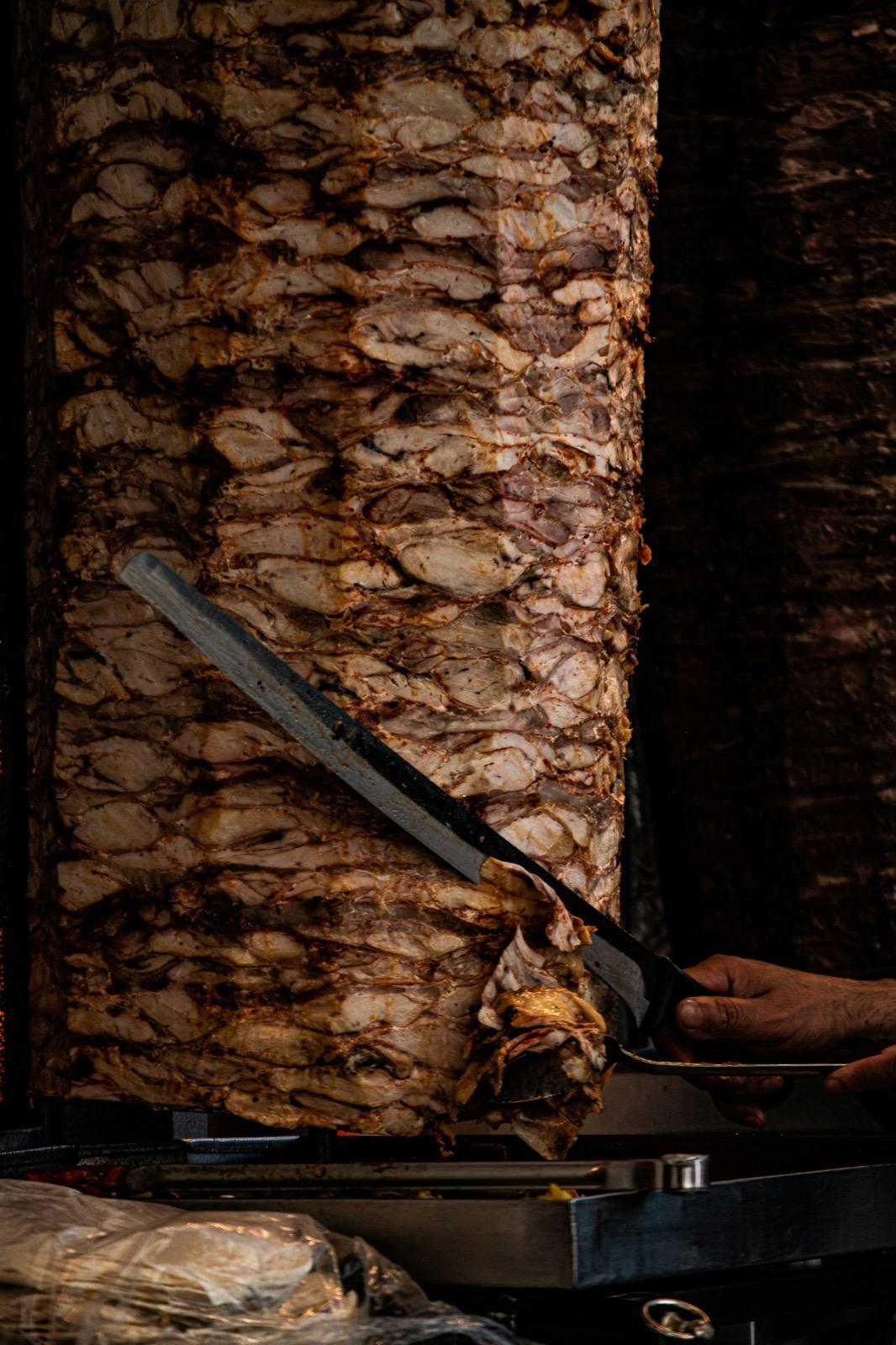
Food truck: main location, additional premises and events
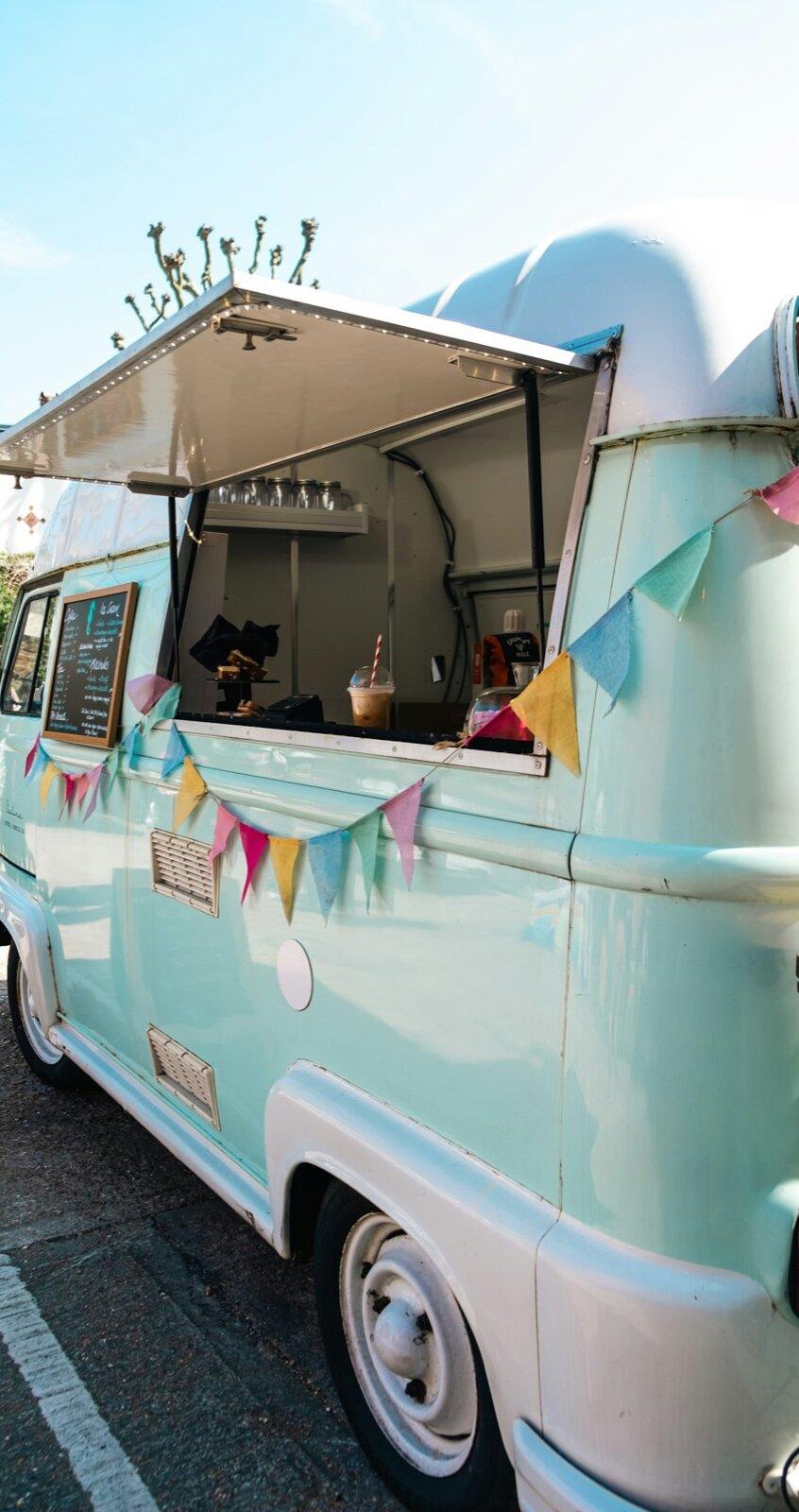
Contrary to what many assume, a food truck in Austria does not travel from place to place as an itinerant trade. When registering your trade, you state a main business location, which can also be your office or production kitchen. Every additional pitch where you sell regularly must be notified to the authority as additional business premises, at the latest on the day you start selling there (§ 46 Abs 2 GewO). For every pitch you also need the consent of the landowner or the municipality's permission.
For individual special occasions such as fairs, markets, sports events or larger construction sites, hospitality businesses may temporarily serve food and drinks outside their location under § 50 Abs 1 Z 11 GewO. At events, the organiser's rules and the events law of the federal state also apply. After conversion, the vehicle itself usually needs individual type approval, and above 3.5 tonnes gross weight you need a category C1 driving licence (up to 7.5 tonnes) or C.
Food hygiene in a small space
A sausage stand is a food business too, under the EU Hygiene Regulation and the LMSVG (Austrian Food Safety and Consumer Protection Act): get registered, run self-monitoring, train your staff. In just a few square metres, every detail counts: a separate hand basin with warm water, enough drinking water in the tank, separate waste water containers, refrigeration with temperature monitoring and a clear separation of raw and ready-to-eat food. Record temperatures, cleaning and incoming goods in writing; the food inspectorate checks stands and trucks too. For allergen information with a small range, letter codes on the board are often enough, see Allergen labelling in Austria. The matching legend with the letters A to R comes from the allergen labelling generator.
Before your first day of trading
- Trade registered, main location and additional premises notified
- Pitch secured in writing, municipal and StVO permits in place
- Food business registered, self-monitoring plan and temperature log
- Hand basin, fresh and waste water, refrigeration checked
- Allergens and prices clearly legible on the board or menu
- Till solution sorted: Registrierkasse or cold hands rule
Cash register and cold hands rule
The Registrierkassenpflicht (cash register obligation) applies from an annual turnover of 15,000 euros per business if cash turnover exceeds 7,500 euros (§ 131b BAO, the Federal Fiscal Code). Card payments count as cash turnover. A busy snack bar reaches these thresholds quickly. For sales outdoors there is a relief, the so-called Kalte-Hände-Regelung: sales from door to door or on public paths, streets, squares and other public places, but not in or in connection with permanently enclosed premises, have been exempt from the cash register and receipt obligation since 1 January 2026 up to 45,000 euros net per year (§ 131 Abs 4 Z 1 lit a BAO, Barumsatzverordnung 2015). You then determine your daily takings by counting the cash.
Whether your stand or truck qualifies depends on the individual case: a sausage stand with an enclosed sales room or a truck with its own seating area is assessed differently from an open chestnut stand. Clarify this with your tax adviser before you do without a register. If the threshold is exceeded, the obligation starts in the fourth month after the end of the VAT return period. Everything else is in the post Cash register in Austria.
Online ordering: your own website or a platform
Lieferando, Wolt and foodora bring reach, but charge commissions that eat up a large part of the margin at snack bar prices. So run your dishes through the menu price calculator to make sure enough is left after commission. Many snack bars run two tracks: a platform for new customers, and their own website with pre-ordering for pickup for regulars, without commission. An order form or WhatsApp ordering with a pickup time saves waiting at the lunchtime peak. When which solution pays off is compared in the post Delivery platforms and your own ordering.
Showing your locations online: website and Google
For food trucks, the most important information on the website is: Where are we today? A weekly schedule with address, time and map link, updated immediately if you cancel because of the weather, is worth more than any brochure. For a snack bar with a fixed address, the Google Business Profile is the most important channel, with opening hours, menu and photos. A mobile truck without a fixed location fits less easily into Google's rules for business profiles. Check the guidelines and use posts for your weekly schedule if you run a profile. You can create opening hours with the opening hours and Google post tool.
How to get it right
- Weekly schedule with locations as text on the website, not just as a story
- Short menu with prices and allergens online
- Pre-ordering for pickup at lunchtime
- Photos of real dishes and of the truck
Better not
- Announce locations only on Instagram
- New pitches without notifying the authority
- Do without a till without having checked the cold hands rule
- Set up more than eight places when only the freies Gastgewerbe is registered
Websites for snack bars and street food
See what a snack bar website looks like with a menu, pre-ordering and a weekly location schedule.