Key points at a glance
- A café with seating needs the trade licence for hospitality (Gastgewerbe). If you bake yourself, Bäcker (baker) or Konditor (pastry chef) is a separate regulated craft (§ 94 Z 3 and Z 40 GewO, the Austrian Trade Act).
- For coffee and pastries with no more than eight seats, the freies Gastgewerbe (unregulated small hospitality trade) may be enough; otherwise you need the proof of qualification.
- The espresso machine with grinder and water treatment is the biggest single investment behind the counter.
- For the Schanigarten (pavement terrace) you need the municipality's permission to use public ground and the notification under trade law under § 76a GewO.
- Cakes in the display are unpackaged food: allergen information must be available for every item.
This post is general information and does not replace legal or tax advice. Rules change and some differ between federal states: check the details with your chamber of commerce (WKO) or IHK, the competent authority or your tax adviser.
Concept: Kaffeehaus, specialty coffee or bakery café?
The classic Viennese Kaffeehaus is about newspapers, Melange, gateaux and guests who stay for a long time. A specialty coffee bar thrives on high-quality beans, filter coffee, fast takeaway and breakfast. The bakery café combines counter sales with a few seats. The decision shapes floor space, staff, opening hours and, above all, the trade licence: if you only sell coffee to go, you are set up differently from a venue with a breakfast menu and a Schanigarten.
Work out early how many cups and slices you need to sell per day to cover rent, staff and cost of goods. The break-even calculator for cafés does this calculation for you. Cafés have a low average spend but many guests. A breakfast or lunch offer, cakes to order or coffee beans to take home stabilise your turnover. Location matters too: morning passers-by and afternoon guests looking for somewhere pleasant to sit are two different target groups. All the steps from premises approval to cash register are summarised in the roadmap for opening a venue in Austria.
Which trade licence do a café and a bakery café need?
As soon as guests consume coffee and cake on the premises, you are running a hospitality business (§ 111 Abs 1 Z 2 GewO). For a full café you need the proof of qualification or a managing director under trade law; the routes are explained in the post Hospitality licence in Austria. For a very small concept with simple food, non-alcoholic drinks and no more than eight seats or standing places, the freies Gastgewerbe under § 111 Abs 2 Z 3 GewO may be sufficient. A glass of prosecco or wine with breakfast, however, already falls outside it.
If you make bread, rolls, gateaux or cake slices yourself, you also need the right trade licence for production: Bäcker (§ 94 Z 3 GewO) and Konditoren (Zuckerbäcker), including ice cream and chocolate production (§ 94 Z 40 GewO), are regulated crafts with their own proof of qualification, usually the Meisterprüfung (master craftsperson exam). If you buy cakes and pastries from a licensed bakery or patisserie, the hospitality licence is enough. Ask the trade authority or the Gründerservice (start-up service) where the line lies for your range, for example for homemade banana bread.
| Concept | Trade licence | Legal basis |
|---|---|---|
| Coffee and bought-in pastries, up to 8 seats, no alcohol except bottled beer | Freies Gastgewerbe | § 111 Abs 2 Z 3 GewO |
| Café with more seats, breakfast or alcohol | Gastgewerbe (regulated) | § 94 Z 26, § 111 Abs 1 GewO |
| Own bread and rolls | Additionally Bäcker (craft) | § 94 Z 3 GewO |
| Own gateaux, pralines, ice cream | Additionally Konditor (craft) | § 94 Z 40 GewO |
Equipment and espresso machine: what to budget for
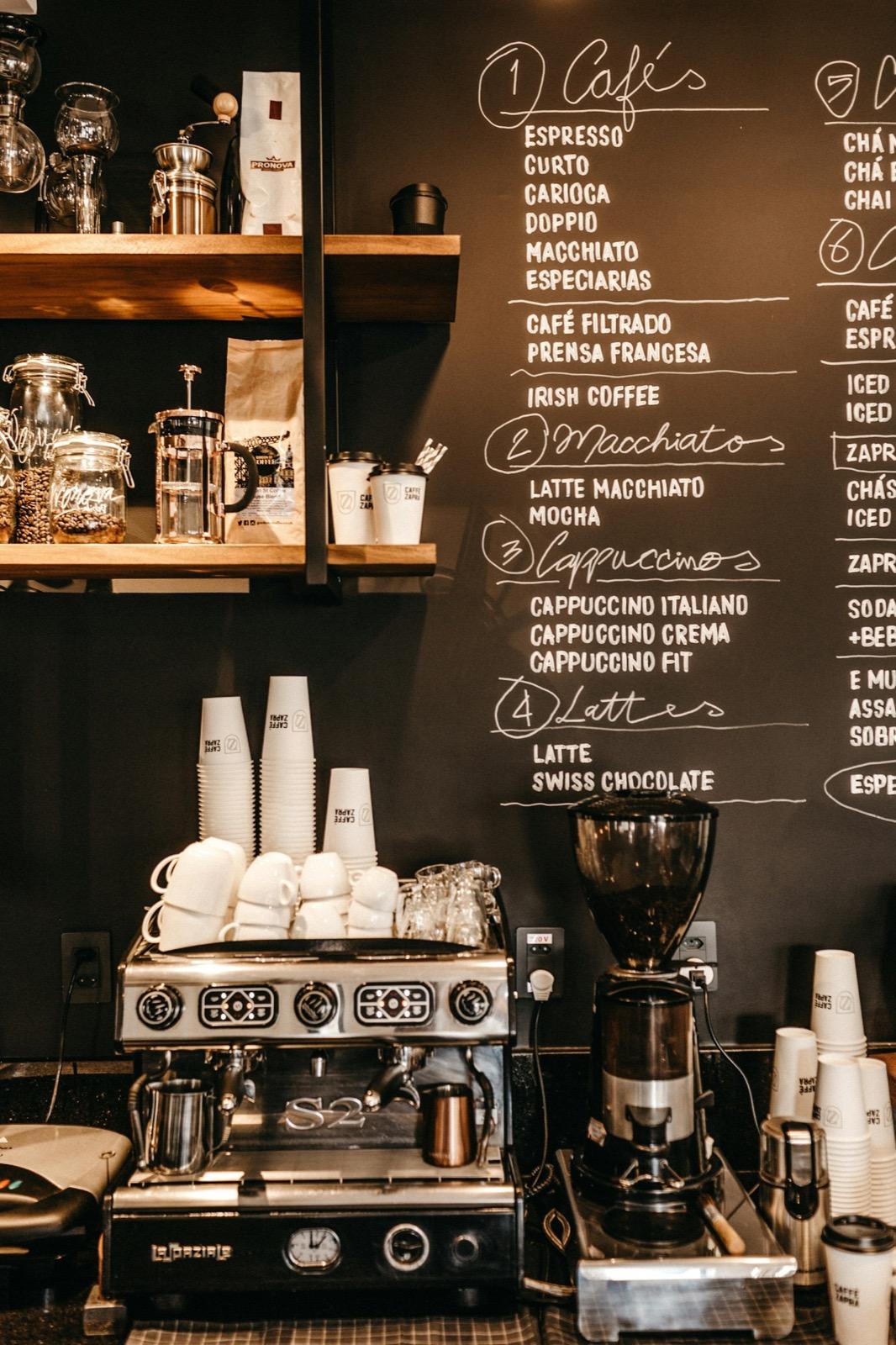
Behind the counter, the equipment determines speed and quality. A two-group commercial portafilter machine, one or two grinders, a water filter or softener, milk refrigeration and a dishwasher are the minimum for a café with seating. On top of that come a refrigerated cake display, fridges, a till system, furniture and crockery. Many roasteries offer machines on lease or on loan in return for buying their coffee. Weigh being tied to one bean over the contract term honestly against buying outright.
| Item | New | Note |
|---|---|---|
| Portafilter machine, 2 groups | approx. €6,000 to €15,000 | Much cheaper used or leased |
| Espresso grinder | approx. €1,000 to €3,000 per grinder | Second grinder for decaf or filter |
| Water treatment | approx. €300 to €1,000 | Protects the machine from limescale |
| Refrigerated cake display | approx. €2,000 to €8,000 | Good lighting helps sell |
| Maintenance and service | ongoing | Agree a maintenance contract with emergency call-out |
The Schanigarten: municipality, usage fee and trade law
For tables on the pavement you need two things. First, permission from the municipality to use public ground, usually with a fee for the area used. In Vienna this is a Gebrauchserlaubnis (use permit) under the Wiener Gebrauchsabgabegesetz (Vienna public space fee act), applied for at the Magistrat (city authority). Other cities and municipalities have their own rules, rates and season dates. In addition, you usually need a permit under the Straßenverkehrsordnung (road traffic regulations) so that the pavement and traffic stay clear.
Second, trade law: under § 76a GewO, guest gardens on public ground or adjacent to public roads need no approval between 8 am and 11 pm if they have no more than 75 seats, serve only for eating and drinking, and a notice prohibits loud talking, singing and playing music. You must notify the authority before you start operating. The municipality can set different hours by ordinance. Plan your application well before the season and ask your municipality about deadlines.
Allergens in cakes and prices on the menu
Gateaux and cakes almost always contain several of the 14 major allergens: gluten, eggs, milk, nuts, often also soya or sulphites in dried fruit. Under the Allergeninformationsverordnung (Allergen Information Ordinance), you must inform guests even for unpackaged goods and document the information in writing (§§ 2 and 4). With a changing cake selection, a small sign per cake with letter codes or an allergen folder at the counter that staff are familiar with works well. If you buy in pastries, get the allergen information from the supplier in writing. Details are in Allergen labelling in Austria, and the allergen legend tool creates the legend for your menu.
Prices must be clearly displayed, on the menu and at the display case. If you serve alcohol, § 112 Abs 4 GewO requires that at least two cold non-alcoholic drinks are no more expensive than the cheapest cold alcoholic drink, calculated per litre, and that they are specially marked. More on this in the post Price display in Austria.
Before your café opens
- Trade registered, plus Bäcker or Konditor if you produce yourself
- Premises approval or confirmation that the existing one is sufficient
- Food business registered, self-monitoring and hygiene training documented
- Allergen information in writing for every pastry and every breakfast dish
- Registrierkasse (certified cash register) with signature put into operation and registered with FinanzOnline
- Schanigarten applied for at the municipality and notified under trade law
Opening hours: what is allowed and what pays off
For hospitality businesses, the Landeshauptmann (state governor) sets closing and opening times per type of business by ordinance (§ 113 GewO), and the municipality can grant exceptions for individual businesses. For a café, the permitted hours are usually more generous than what makes economic sense. Choose opening hours that suit your location: early for commuters, longer at weekends for breakfast and brunch. A rest day protects your team, but it must be communicated consistently everywhere.
Nothing annoys guests more than a locked café that Google says is open. Update opening hours, public holidays and closing periods on your website and Google profile at the same time. With the opening hours and Google post tool you create both in one step.
Instagram, Google profile and website
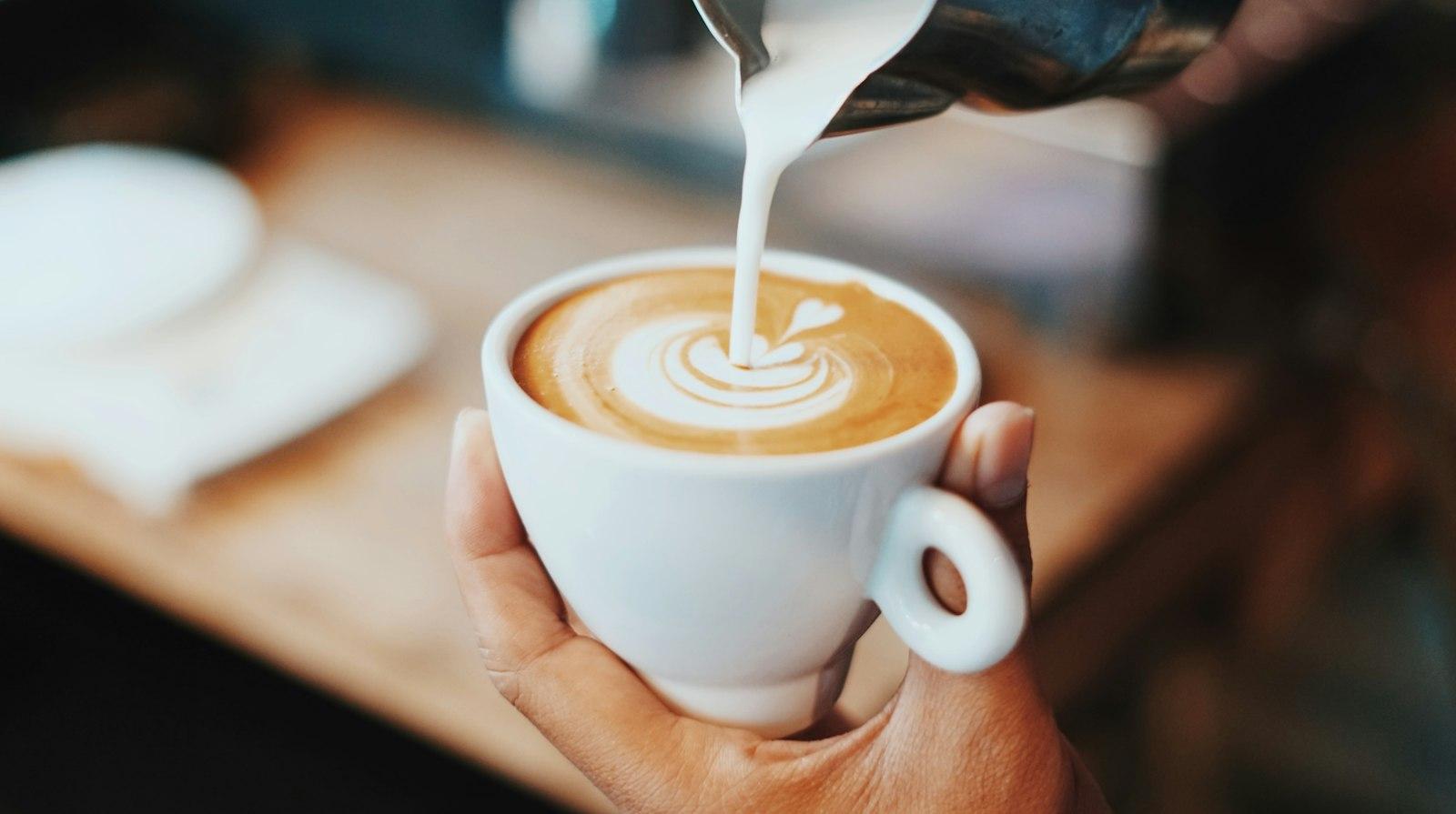
Hardly any business lives on pictures as much as a café. Instagram shows latte art, the cake of the day and the Schanigarten in the evening light. But you are mainly found via Google Maps: a complete Google Business Profile with real photos, menu, opening hours and replies to reviews brings in new guests. Your own website brings it all together: menu as text, breakfast offer, cake orders, directions and legal notice (Impressum). Tips on reviews are in the post Google reviews for hospitality, and for the menu on the table there is the menu QR code tool.
How to get it right
- Show the cake of the day every day in an Instagram story and a Google post
- Breakfast menu as text on the website so that Google finds it
- Offer cake orders via a form or WhatsApp
- Reply briefly and kindly to every review
Better not
- Only Instagram without a website and legal notice
- Menu as a photo without prices
- Change opening hours in summer but forget to update them online
- Show stock photos from image libraries as your own cakes
Websites for cafés
See what a café website looks like with a breakfast menu, cake of the day, opening hours and Schanigarten photos.