Key points at a glance
- A café serving only non-alcoholic drinks and food needs no Gaststättenerlaubnis (restaurant licence) where the federal Gaststättengesetz applies (§ 2 (2) GastG); it does need the trade registration.
- Even a glass of sparkling wine or an Irish coffee on the menu means you need a licence or a notice with a reliability check, depending on the federal state.
- If you bake bread and cakes as a craft, you are running a licensed craft trade (baker, pastry chef) and need an entry in the Handwerksrolle (register of craftspeople), usually with a master craftsperson.
- Tables on the pavement need a Sondernutzungserlaubnis (street-use permit) from the municipality.
- Allergens, a price list next to the entrance and a well-kept Google and Instagram profile are part of the package from day one.
This post is general information and does not replace legal or tax advice. Rules change and some differ between federal states: check the details with your chamber of commerce (WKO) or IHK, the competent authority or your tax adviser.
What kind of café will it be?
Specialty coffee bar, classic coffee house, breakfast café, patisserie with seating or bakery with a café corner: the concept decides the space, equipment, staff and permits. The more you bake and cook yourself, the more kitchen, ventilation and hygiene effort you need to plan for. The more you buy in, the easier the start, but the more important a clear profile becomes against chains and bakery branches.
- Coffee bar: little space, high turnover, focus on coffee quality and takeaway.
- Breakfast and brunch café: more kitchen, longer stays, weekend reservations.
- Patisserie café: own cakes and pastries, needs a bakery and skilled staff.
- Bakery café: retail and hospitality under one roof, often with early opening hours.
You will find the general process with trade registration, tax office, staff and timeline in our guide Opening a restaurant in Germany. This guide covers what is special about cafés.
Do you need a Gaststättenerlaubnis?
That depends on your drinks and your federal state. Under § 2 (2) GastG, serving non-alcoholic drinks and selling prepared food require no licence. A café that only offers coffee, tea, lemonades, juices, cake and breakfast therefore needs no licence in the seven states with the federal Gaststättengesetz. The trade registration under § 14 GewO is still mandatory.
Many cafés, however, want to offer an Aperol, prosecco with brunch or a coffee with a dash of something. In states with federal law, you then need a Gaststättenerlaubnis, including the IHK Unterrichtungsnachweis (certificate from the Chamber of Commerce briefing). In states with their own hospitality law, such as Lower Saxony, Saxony or Hesse, a notice (Anzeige) is enough, and the authority checks your reliability. Since 2026, Baden-Württemberg has required a notice for every fixed-location hospitality business, even without alcohol. The state table in our guide to the Gaststättenerlaubnis shows which model applies where.
Baking yourself: master craftsperson rules and the Handwerksrolle
Baker and pastry chef are listed in Annex A of the Handwerksordnung (Crafts Code) and are licensed crafts. Anyone who runs such a craft independently from a fixed location must be entered in the Handwerksrolle under § 1 HwO. For this, the business usually needs a master craftsperson (Meister), either you or an employed manager. There are exceptions, for example for experienced journeymen.
Not every homemade cake turns your café into a craft business. The Handwerksordnung recognises minor activities (§ 1 (2) HwO) that can be learned in a short time, and the insignificant ancillary business (§ 3 HwO), whose scope does not exceed the average annual working time of a one-person craft business. The Handwerkskammer (Chamber of Crafts) will tell you bindingly where the line lies for your concept. Ask there before you set up a bakery.
| What you offer | Crafts law | Next step |
|---|---|---|
| Bought-in cakes and baked goods | Not a craft | Trade registration, suppliers with allergen information |
| A few cakes to your own recipe | Often a minor activity or insignificant ancillary business | Check briefly with the Handwerkskammer |
| Own bakery with bread, rolls, cakes | Licensed craft (Annex A HwO) | Entry in the Handwerksrolle, master craftsperson or exemption permit |
Equipment and premises
Equipment eats up a large share of your start-up capital. Budget not only for the purchase but also for maintenance, water filters and spare parts. How many guests a day you then need to cover rent, repayments and staff is shown by the free break-even calculator for your café. Used equipment from dealers who offer a warranty is a good option, as long as hygiene and manufacturer service are in order.
Basic equipment for a café
- Portafilter or fully automatic espresso machine, grinders, water filter
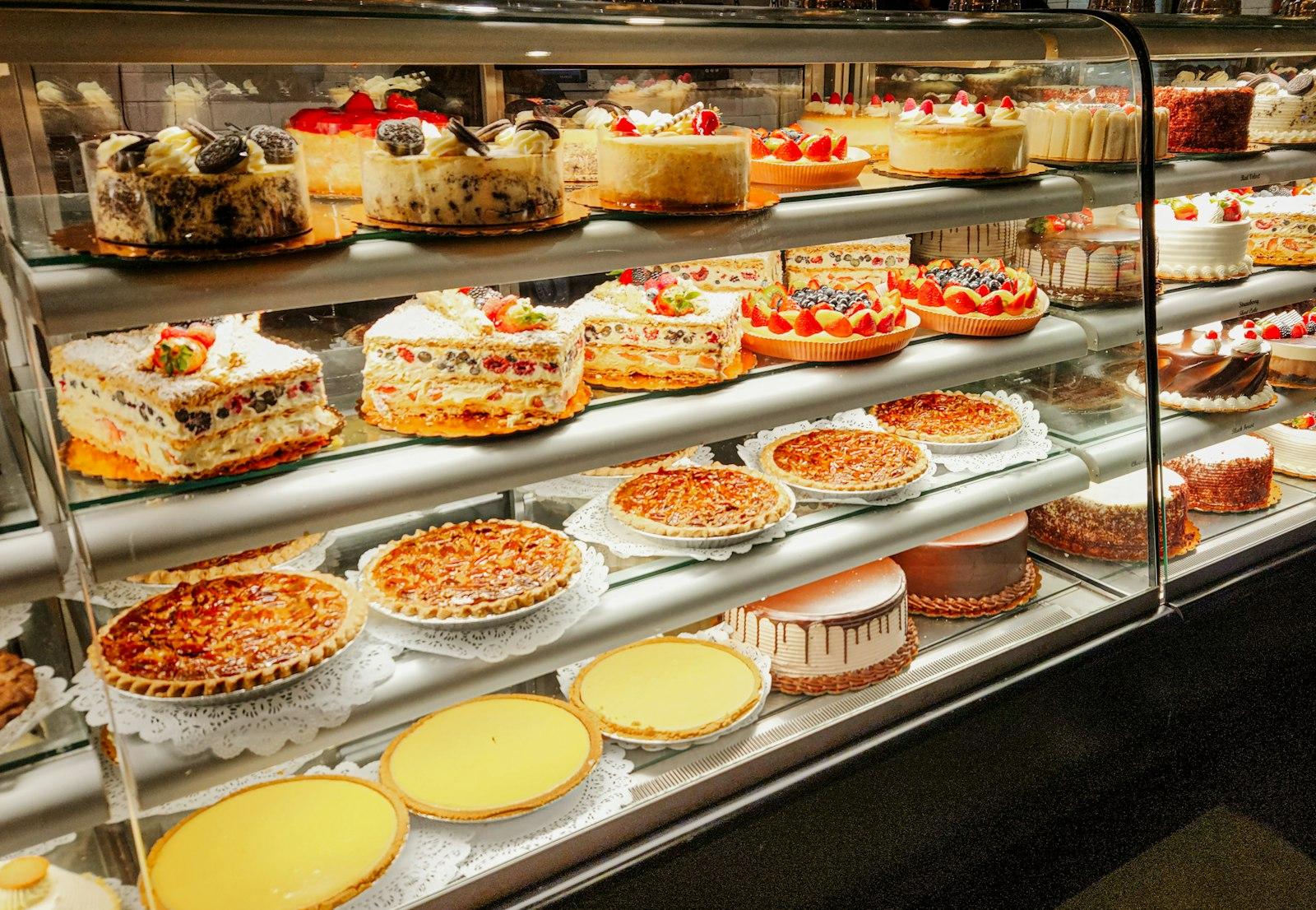
- Refrigerated cake display and cooling with temperature control
- Commercial dishwasher and hand basin with hot water
- Till system with TSE, card payments and receipt printer
- Guest toilet that meets the building authority's requirements
- Waste separation and storage space for milk, beans and packaging
If a shop is turned into a café, the building authority reviews the change of use (Nutzungsänderung): toilets, escape routes, ventilation and parking spaces. For hygiene, the IfSG briefing (under the Infection Protection Act), HACCP self-checks and inspections by the food inspection authority apply, as in any hospitality business.
Outdoor seating: a street-use permit for the terrace
Tables and chairs on a public pavement or square count as special use (Sondernutzung) of the street. For this, you need a Sondernutzungserlaubnis under your state's road law and your municipality's bylaws; usually the public order office or the civil engineering office (Tiefbauamt) is responsible. The municipality normally charges a fee per square metre and season and can set conditions on furniture, umbrellas, walkway width and opening times.
- Apply in good time: for the summer season, it is best to submit the application in winter.
- Consider the neighbours: outdoor seating areas often have shorter evening hours than indoors.
- Private land: even on your own property, a building permit for outdoor service may be required.
- Hospitality law: where a licence is required, it must also cover the outdoor area.
Clarify
Check with the trade office, building authority and, if needed, the Handwerkskammer what your concept requires at this location.
Apply
Start the trade registration, change of use, street-use permit for the terrace and, for alcohol, the licence or notice.
Set up
Install machines, cooling, a till with TSE and the washing-up area, create HACCP logs, train your team with the IfSG certificate.
Get visible
Launch your website with menu and opening hours, your Google profile and Instagram a few weeks before opening.
Allergens, prices and drinks menu
Cakes, croissants and milk alternatives are full of allergens: gluten, egg, milk, nuts, soy. For unpackaged food, you must provide information on the 14 main allergens under the LMIV (the EU Food Information Regulation); in Germany, under the Lebensmittelinformations-Durchführungsverordnung, this can be done in writing or, under certain conditions, verbally with written documentation. Our guide to allergens in Germany explains how; the allergen labelling generator creates the matching legend.
Under § 13 PAngV (Preisangabenverordnung, the Price Indication Ordinance), restaurants need a price list for food and drinks that is placed on the tables or shown before ordering. A list of the main prices belongs next to the entrance. For cakes in the display, price tags on the goods are enough. Service charges and surcharges must be included in the prices. Details in our guides to price display and the digital menu.
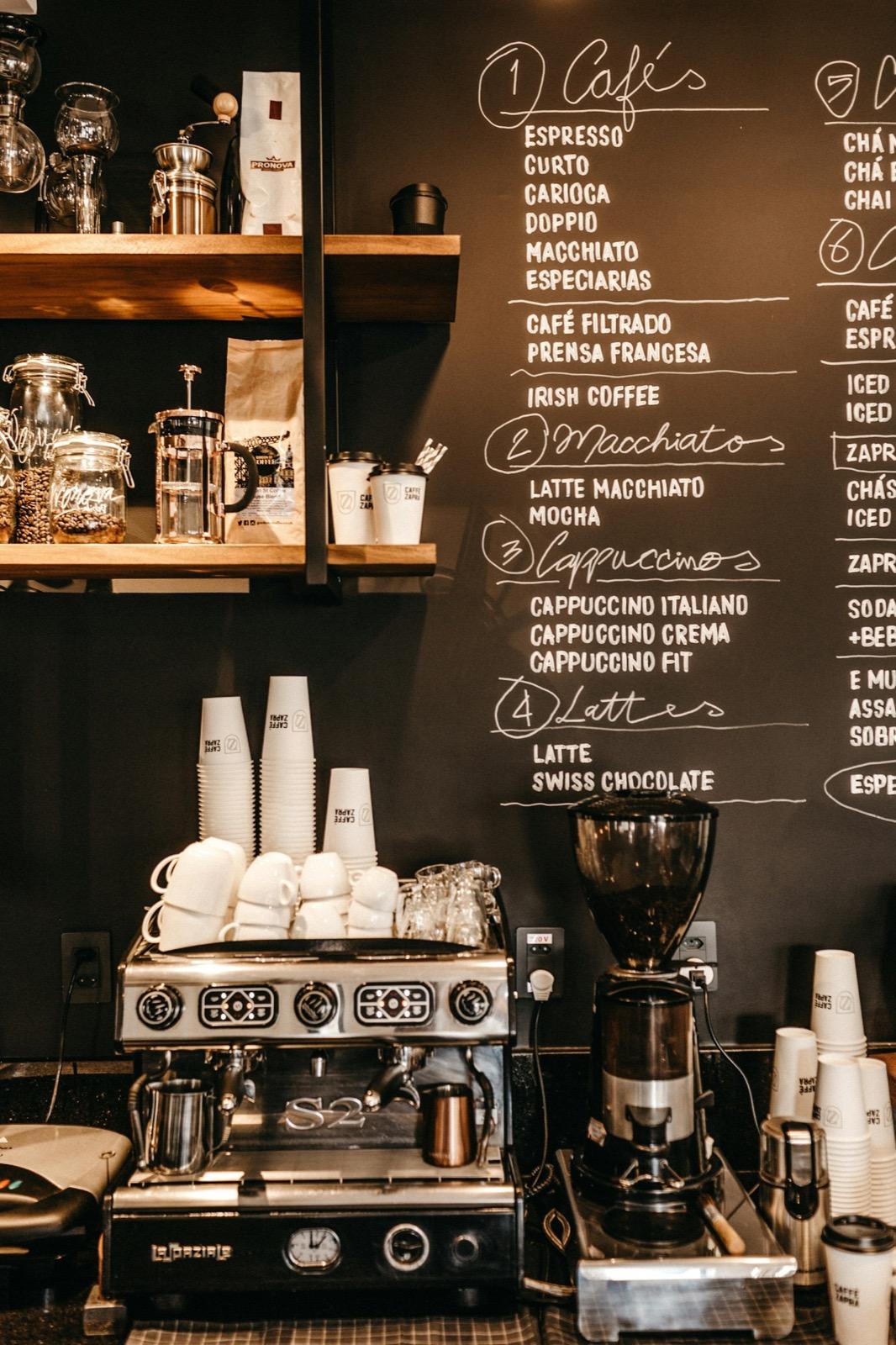
Instagram, Google and website
Cafés live from pictures: latte art, cakes, breakfast in the morning light. That makes Instagram the most important channel for many. But people mainly find you on Google Maps when they search for “café near me”. A complete Google Business Profile with photos, opening hours and the category “Café” is therefore essential, and your own website with menu and breakfast times means guests do not have to dig through Instagram stories to find your opening hours.
How to get it right
- Keep opening hours identical on your website, Google and Instagram
- Post the cake of the day and seasonal offers as Google posts
- Make weekend brunch bookable on your own site
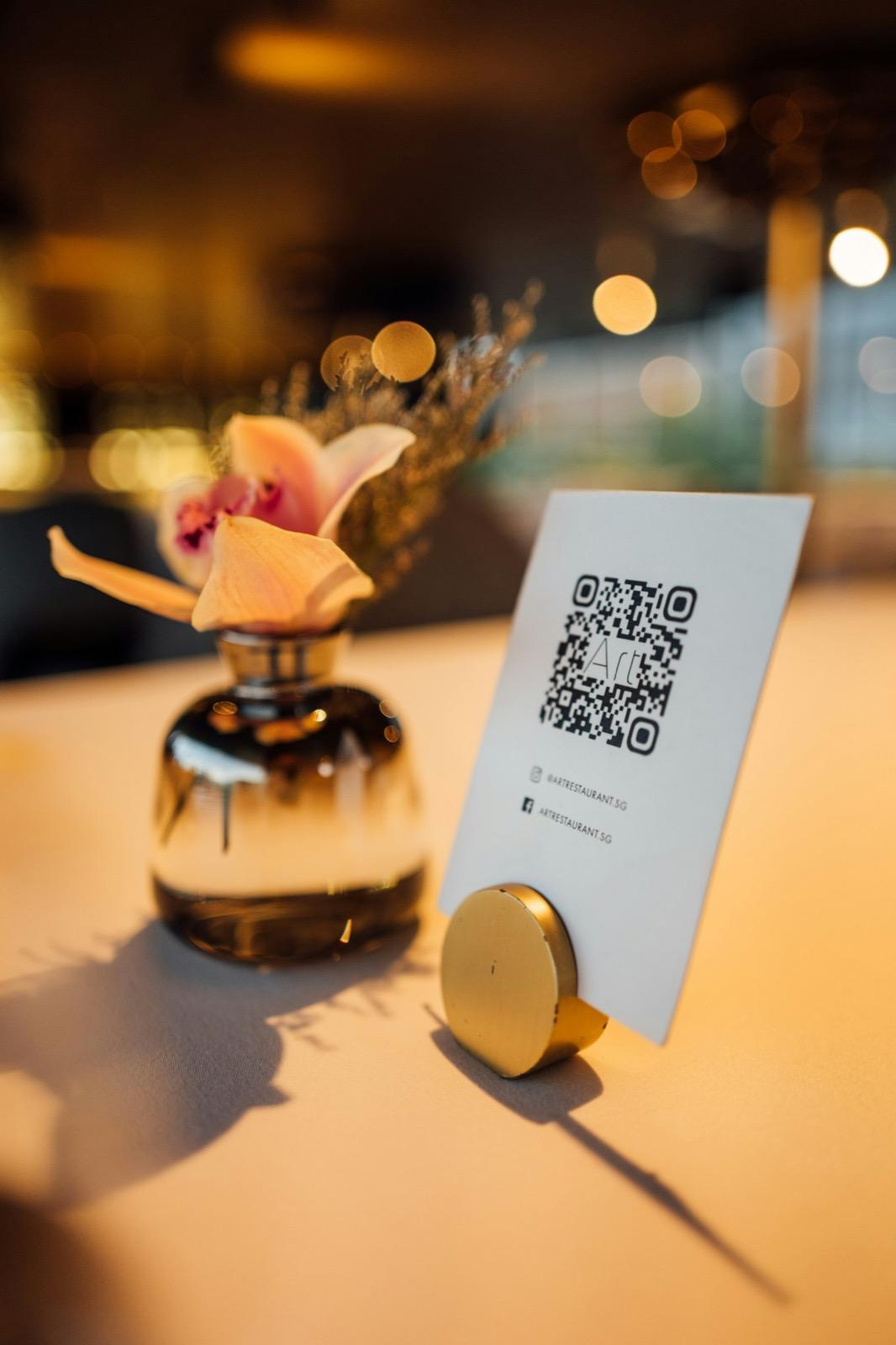
- Put a QR code for the menu on the tables
Better not
- Only offer the menu as a photo in Instagram highlights
- Forget holiday opening hours
- Leave reviews unanswered
- Use photos that do not show your café
Examples of café websites
This is how the website for your café or coffee house could look: with menu, cake of the day and opening hours.
Your café website in one week
Request a free preview: a website with menu, opening hours and Google integration at a fixed price.
A free preview of your venue website, designed by us.