Key points at a glance
- According to the German Federal Statistical Office, bean coffee cost on average 57 percent more in April 2026 than in 2020. Green coffee has fallen slightly from its record highs, but wages, energy and rent keep rising.
- Do not calculate the new price from the cost of goods alone, but from the contribution margin per cup in euros, which also has to cover higher staff and energy costs.
- Prefer small, regular steps of 10 to 30 cents over one big jump after years. Watch price thresholds and differentiate between espresso, milk drinks and specialities.
- Change the menu, board, entrance notice, till, website and Google profile on the same day. The Austrian Price Labelling Act (PrAG) and the German Price Indication Ordinance (PAngV) apply.
- Explain the increase briefly, honestly and without apologising. Give your team two or three phrases and answer reviews calmly.
This post is general information and does not replace legal or tax advice. Rules change and some differ between federal states: check the details with your chamber of commerce (WKO) or IHK, the competent authority or your tax adviser.
Why coffee stays expensive
Since 2024, world market prices for arabica and robusta have at times reached their highest level in decades. Drought, heat and heavy rain in Brazil and Vietnam have shrunk harvests, and transport, fertiliser and wages in the growing countries have become more expensive. Retail prices follow with a delay: according to figures from the German Federal Statistical Office (Destatis) reported by the dpa news agency in June 2026, bean coffee cost on average 57 percent more in April 2026 than in 2020. Roasters who held their prices for a long time are now passing the costs on to their hospitality customers.
Falling exchange prices do not automatically mean cheaper beans for your café. Import prices for green coffee swing a lot: in July 2026, according to Destatis, they were 5.1 percent above the same month of the previous year and 9.1 percent above June. Roasters also buy months in advance. So do not count on the problem solving itself; ask your roaster when the next price list is due and how long the current prices are valid.
On top of that comes everything that is not in the cup: wages, energy, rent, insurance. In small hospitality businesses in Austria, staff costs now make up more than 42 percent of revenue, according to the Austrian Economic Chamber (WKO). At the same time, guests have got used to higher prices: according to YouGov figures reported by dpa, a cappuccino in Germany cost 3.14 euros on average in 2025, compared with 2.24 euros in 2021. In Vienna, a cappuccino or a Melange often costs between 5 and just under 6 euros.
Calculating the new price
The most common mistake: the roaster raises the price per kilo by 5 euros, and the café adds 10 cents to the cappuccino. That covers the beans, but not the higher wages, the electricity bill or the new rent. So calculate in three steps: first the current cost of goods, then the contribution margin a cup has to earn in future, and only at the end the menu price including VAT.
Update the cost of goods
Enter the new purchase prices for beans, milk, plant-based drinks and cups into your recipe. Calculate every drink separately, not just the cappuccino.
Set the contribution margin per cup
Net selling price minus cost of goods is the amount that pays for staff, rent and energy. If these costs have risen by 8 percent, the contribution margin has to grow by roughly that share too.
Add VAT
Coffee drinks served on the premises carry 19 percent VAT in Germany and 20 percent in Austria, including Melange and cappuccino: in Austria, milk with added coffee is excluded from the reduced rate (Annex 1 no. 23 UStG 1994). To take away, milk-based drinks with at least 75 percent milk can be taxed at 7 percent in Germany (Annex 2 no. 35 UStG). As of November 2026; clarify individual cases with your tax adviser.
Round to a clean menu price
Round to 10 cents so the menu and the change stay simple, and check whether the price ends up just above a threshold such as 4.00 euros.
| Item | Before | New |
|---|---|---|
| Net cost of goods (beans 25 → 32 € per kg, milk slightly dearer) | €0.75 | €0.90 |
| Gross menu price | €3.60 | €4.10 |
| Net selling price | €3.03 | €3.45 |
| Contribution margin per cup | €2.28 | €2.55 (about 12 % more) |
| Cost of goods as share of net price | about 25 % | about 26 % |
The example shows: 20 cents would have been enough for the beans alone. Only with 50 cents does the contribution margin grow far enough to also pay for higher wages and energy costs. In Austria, with 20 percent VAT, the same net figures lead to about 4.10 to 4.20 euros. How cost of goods, fixed costs and contribution margin fit together for the whole business is explained in the guide to menu costing in hospitality. How many drinks and guests you need per day to cover your fixed costs is shown by the break-even calculator.
Work out the new coffee price in a minute
Enter the cost of goods, choose a target share or factor and the VAT for Austria or Germany: the price calculator rounds to a clean menu price.
How much at once? Price steps and price thresholds
With coffee, guests usually remember a single price: that of their usual drink. A jump from 3.60 to 4.10 euros stands out; two steps of 20 to 30 cents each a few months apart are much less noticeable. If you have not raised prices for years, a bigger step is often unavoidable. Then it helps to spread it across the menu instead of raising every drink by the same amount.
| Approach | How it works | Good for |
|---|---|---|
| Evenly | All coffee drinks by the same amount, for example 30 cents | small menu, quick changeover |
| Staggered | Espresso and Verlängerter (Austrian long black) moderately, large milk drinks and specialities more | cafés with many espresso regulars |
| Review surcharges | Price oat milk, extra shot, syrup and alternative beans to cover costs | speciality coffee, many variants |
| Rethink sizes | Separate small and large clearly, small size as an affordable entry point | coffee bars, takeaway business |
| Combo offers | Coffee with cake or breakfast at a bundle price | coffee house, bakery café |
- Price thresholds: 3.90 euros feels much cheaper than 4.00 euros. If you cross a threshold, do it by an amount that is worth it rather than by 10 cents.
- Reference product: for many guests the espresso is the yardstick for the whole café. A moderate espresso price can cushion dearer milk drinks and specialities.
- Surcharge for plant-based drinks: an oat surcharge of 30 to 60 cents is common. Some cafés skip it and build it into all milk drinks, which feels welcoming but has to be costed.
- Combo offers with food: in Germany food carries 7 percent and drinks 19 percent, in Austria usually 10 and 20 percent. Bundle prices have to be split correctly in the till. More in the guides to the POS system in Germany and the cash register in Austria.
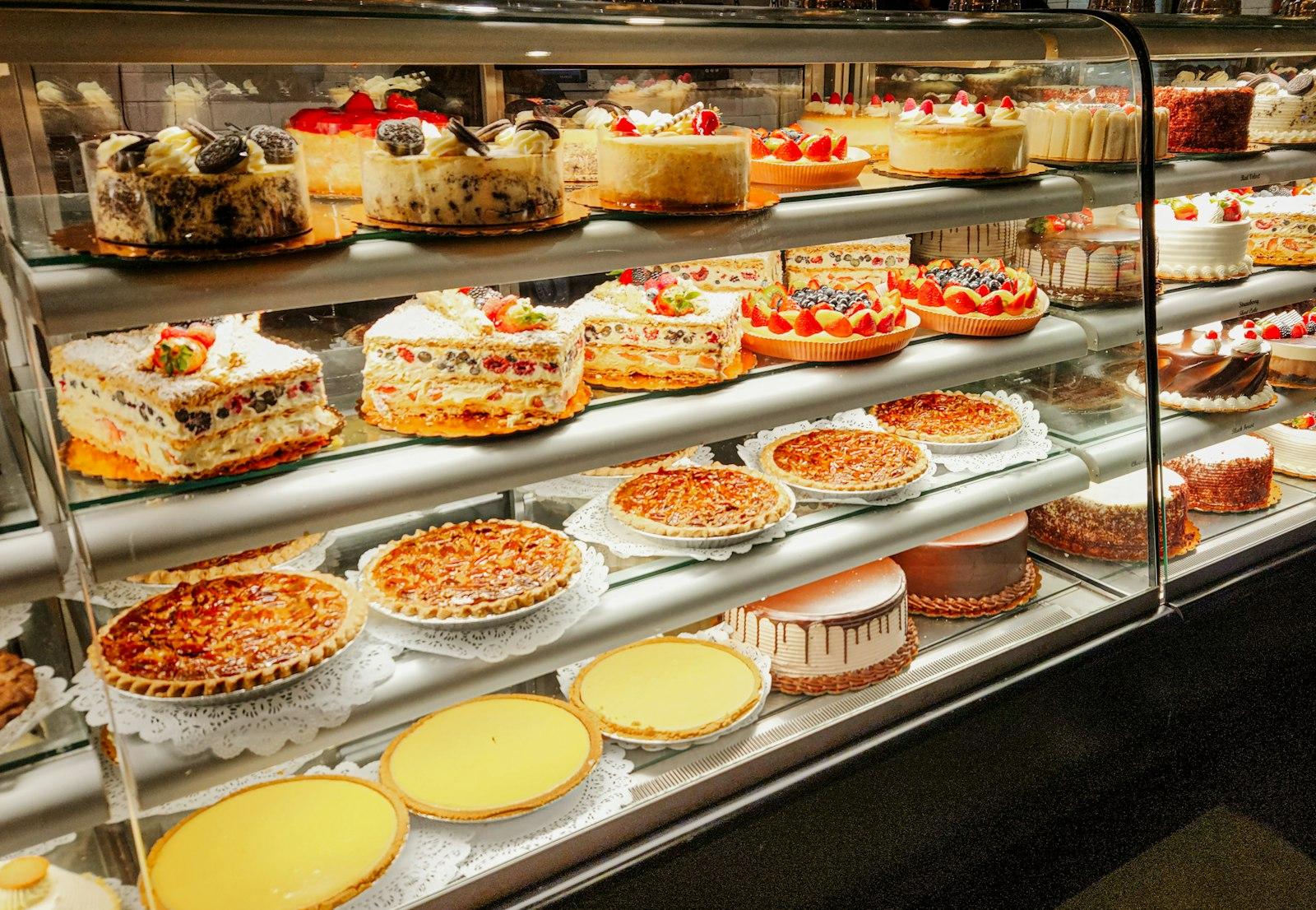
- Review the whole menu: if you are changing things anyway, also recalculate tea, hot chocolate, lemonades and wine. Work out the glass price for bottled drinks with the drink calculator, and check cakes and tortes with the guide to the café cake display.
Roadmap: a new menu in four weeks
A price increase is quickly decided, but only well executed when every price is right everywhere. Plan a fixed effective date, ideally at a natural occasion such as a change of season, a new menu or the start of the year. Avoid periods when many tourists or new customers come for the first time after seeing the old prices online.
Four weeks before: calculate
Get new purchase prices from your roaster, dairy and wholesaler, cost every drink and decide the price steps.
Three weeks before: prepare menu and notice
Prepare the menu, board, entrance notice, website and online menu, order printing, set up the items in the till.
Two weeks before: brief the team
Explain the reasons and figures in a team meeting and practise phrases for guest questions together.
One week before: tell your regulars
A short note at the counter, on Instagram or in the newsletter. Optionally a small thank-you for regulars.
Effective date: everything at once
Switch menu, board, entrance notice, till, website, Google profile and delivery platforms on the same morning.
Menu, board and notice: price display in Austria and Germany
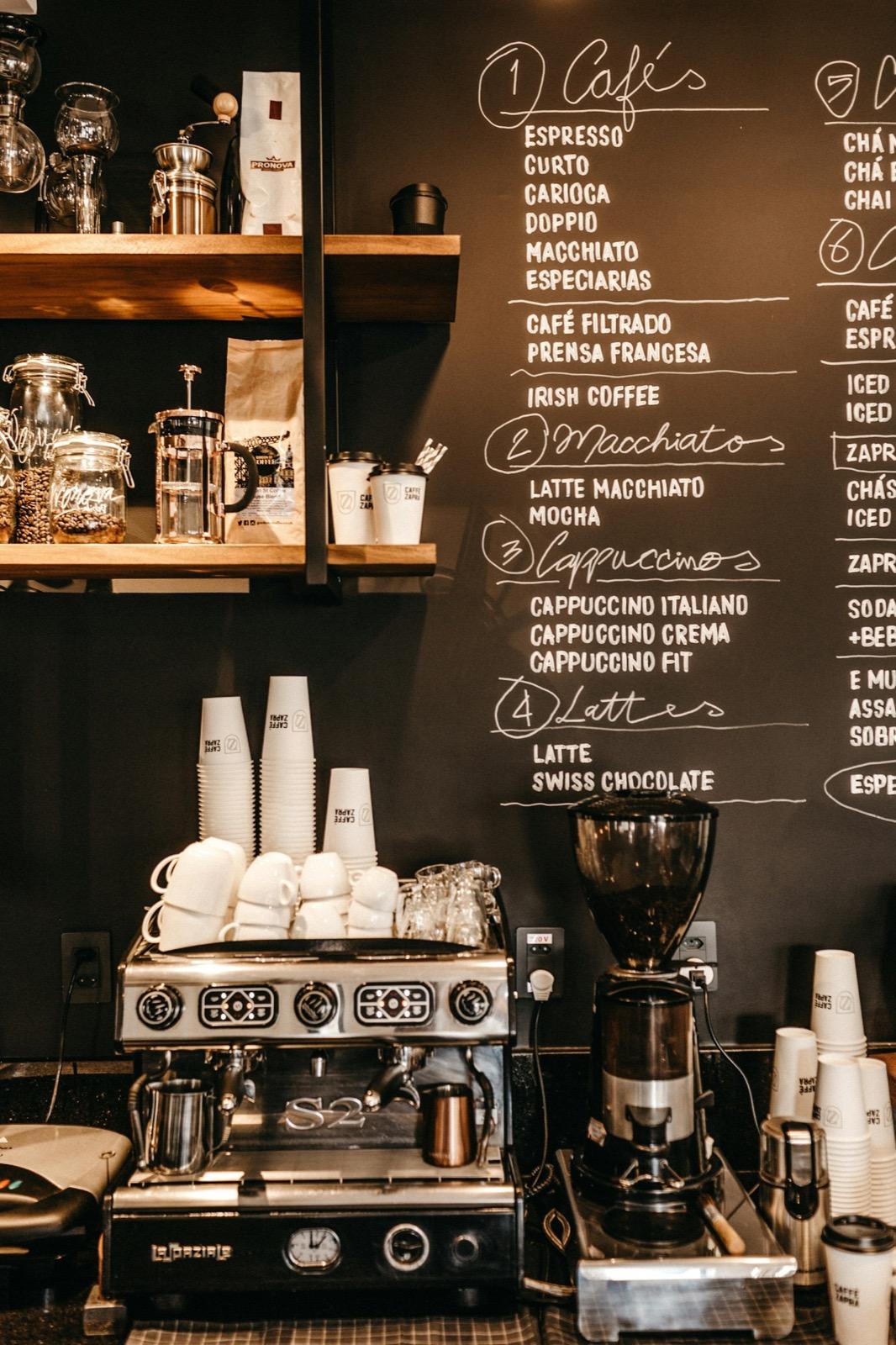
As soon as the new prices apply, they have to appear wherever guests see prices. A cappuccino for 4.10 euros at the till and 3.60 euros on the board is not just annoying, it breaches the price display rules. The rules in the two countries differ on one important point: the notice at the entrance.
| Duty | Austria (PrAG) | Germany (PAngV) |
|---|---|---|
| Menu on the premises | Present price lists for food and drinks before ordering (§ 6 (1)); smaller businesses may instead display them clearly in the dining room (§ 6 (2)) | Price list on the tables, presented before ordering or clearly displayed (§ 13 (2)) |
| Notice at the entrance | Price list of the food readable from outside, only if hot food is offered regularly (§ 6 (4)) | Price list of the main food items and drinks next to the entrance (§ 13 (2)) |
| Display case, takeaway | Price on the item or on a clearly visible sign (§ 4 (1); for self-service § 6 (3)) | Price on the product or in the price list (§ 13 (1)) |
| Price format | Gross prices in euros including all taxes and surcharges (§ 9) | Final prices including VAT, service charge and surcharges (§ 13 (5)) |
For a German café this means: coffee is one of the main drinks and therefore belongs on the notice next to the door. In Austria, the outside notice is tied to hot food. If your coffee house regularly serves toasties, breakfast with scrambled eggs or a lunch menu, you need it, and adding the main coffee drinks is helpful for guests anyway. The details are explained in the guides to price display in Austria and Germany.
How to get it right
- Print new menus and notices or rewrite the board completely
- State quantities where they differ, for example “Cappuccino small 0.2 l / large 0.3 l”
- Show surcharges for oat milk, extra shot and syrup visibly on the menu
- Switch the till items on the effective date and check the first receipt
Better not
- Cover old prices with a pen or with stickers that peel off
- Change only the menu on the table and forget the notice on the door
- Only mention new prices at the till while the board still shows the old ones
- Announce surcharges only verbally at the counter
Updating your website, Google profile and delivery platforms
Many guests see your prices online first: on your website, in your Google profile, in photos of the menu uploaded by other guests, or on a delivery platform. If the old prices are still there, the new menu in the café feels like a surprise, and that is exactly where one-star reviews saying “the website said something else” come from. Prices on your website and Google are voluntary information, but they also have to be final prices and should match the menu on the premises.
Switch online on the effective date
- Drinks menu on your own website, as HTML text and not just as a PDF
- Menu in your Google Business Profile, including replacing photos of the old menu
- Prices on delivery platforms and ordering apps
- Instagram highlights or pinned posts with menu photos
- QR code on the table points to the current online menu
It is easiest when your menu is maintained in one place and the website, QR code and notice are generated from it. How that works is explained in the guide to the digital menu; what belongs in your Google profile is covered in the guide to the Google Business Profile. Create a table tent with a QR code to the current menu for free with the menu QR code generator.
Telling guests: notice, social media and the right tone
Neither the Austrian Price Labelling Act nor the German Price Indication Ordinance requires you to announce price increases on the menu in advance (as of November 2026). They require guests to see the current price before ordering. Where you have promised prices by contract, for example on vouchers, subscriptions or to business customers, what was agreed applies. A short note still feels fair, especially for regulars who order the same thing every morning. Keep it short, factual and friendly: one reason, one thank-you, no complaining and no long justification.
How to get it right
- Give one concrete, understandable reason (beans, milk, wages)
- Say what stays the same: roaster, quality, homemade cake
- Show regulars your appreciation with a stamp card or a coffee-and-cake offer
- Redeem stamp cards and vouchers already issued as promised
Better not
- Apologise at length or make guests feel guilty
- Blame “politics” or “inflation” in general
- Quote individual percentages that guests will recalculate and question
- Keep quiet about the increase and hope nobody notices
A stamp card where every tenth coffee is free costs you around 10 percent of a coffee per visit from regulars and binds exactly the guests who feel an increase most. Design business cards with a stamp card on the back with the business card generator; more ideas are in the guide to loyalty programmes in hospitality. A breakfast or brunch offer with coffee at a bundle price shifts attention from the single price to the value, more on that in the guide breakfast and brunch in a café.
Preparing the team: phrases for the counter
Most questions about the price increase do not land with you but with the part-timer at the till. Anyone unprepared apologises, justifies themselves or spontaneously gives a discount. Raise the increase openly with your team, explain the reasons with a few figures and agree on a handful of phrases that suit your café.
- “Yes, we have adjusted our prices. Beans and milk have become much more expensive, and we want to stay with our roaster.”
- “The espresso is still 2.60 euros if you would like something a little cheaper.”
- “With the stamp card every tenth coffee is free, shall I give you one?”
- “Thank you for mentioning it. I will gladly pass that on to the owner.”
Decide who is allowed to give discounts and stick to it. Spontaneous discounts for individual guests seem unfair to everyone else and undermine the new calculation.
Responding to criticism and reviews
A few critical comments after a price increase are normal. Reply to Google reviews about the price briefly, kindly and without a numbers war: thank them for the feedback, one sentence on the reason, one sentence on what guests get for it. Other readers pay more attention to your tone than to the price. How to answer reviews calmly and collect more positive ones is shown in the guide to Google reviews in hospitality.
After the increase: watch the numbers
Whether the increase works shows up in the till, not in a feeling on a quiet Tuesday. Four to eight weeks after the effective date, compare cups sold, average bill and coffee revenue with the same weeks before the increase, adjusted for weather, school holidays and public holidays. A slight drop in volume is often manageable if the overall contribution margin rises.
Checklist for raising coffee prices
- New purchase prices obtained from roaster, dairy and wholesaler
- Cost of goods and contribution margin recalculated for every coffee drink
- Price steps and thresholds decided, surcharges reviewed
- Menu, board, entrance notice and till switched on the effective date
- Website, Google profile, delivery platforms and QR menu updated
- Team informed and phrases practised
- Short note for guests at the counter or on social media
- Date for the review in four to eight weeks in the calendar
Change prices once, up to date everywhere
With your own café website you maintain your drinks menu in one place, and website, QR menu and notice are updated instantly. See your preview for free.
A free preview of your venue website, designed by us.
Sources
- Destatis: import prices in July 2026, green coffee (German)
- Lebensmittel Praxis (dpa): bean coffee 57 % more expensive in April 2026 than in 2020, according to Destatis (German)
- Tageskarte (dpa): cappuccino prices in Germany (YouGov) and Europe (German)
- WKO: hospitality industry analysis 2026 (German)
- Austrian Price Labelling Act (PrAG), § 6 (JUSLINE)