Key points at a glance
- A café area brings higher average bills and guests outside the rush hours, but it costs space, staff time and organisation.
- In Austria, bakers may serve their own products and pour non-alcoholic drinks in the sales room (§ 150 GewO). A bigger offer can require a hospitality trade licence. In Germany, food and soft drinks need no permit under § 2 GastG, alcohol usually does.
- Eating in or taking away can change the VAT rate: in Austria since July 2026 for bread, for example, in Germany for drinks. Your till has to keep both apart cleanly.
- A small, easy-to-plan breakfast made from your own range is usually the best way to start.
- Separate routes for counter sales and service, clear responsibilities and a visible ordering routine prevent jams at the counter.
This post is general information and does not replace legal or tax advice. Rules change and some differ between federal states: check the details with your chamber of commerce (WKO) or IHK, the competent authority or your tax adviser.
Why a café area can pay off
A bakery lives from the early morning: rolls for breakfast at home, a coffee on the way to work. After the rush, things often go quiet. A café area fills exactly these gaps. Guests who sit down are more likely to order a second coffee, a slice of cake or a breakfast plate, and the average bill rises. At the same time, the bakery becomes a meeting point in the neighbourhood, which builds a loyal customer base.
On the other side are costs: space that is no longer available for shelves or storage, furniture, crockery, dishwashing, more cleaning and above all staff time. So do a rough calculation up front: how many seats can you actually fill at which times, and how much extra revenue per seat and day do you need for the effort to pay off? The free break-even calculator shows how many extra guests per day you need to cover rent, staff and equipment.
- Location: Are there offices, schools, doctors’ surgeries or a market nearby whose people have time to sit down?
- Times: When is the shop empty, and when could a café area bring in revenue, for example mid-morning or at the weekend?
- Range: What do you already have in-house that can be sold as breakfast or with coffee?
- Team: Who looks after tables, crockery and cleaning when the counter is at its busiest?
What can change under trade law
Whether you need additional permits for the café area depends on the country, the offer and the type of service. The following points are general guidance and do not replace advice on your individual case. Check your concept with your chamber of commerce (WKO in Austria, IHK in Germany) and the trade authority before you start building.
Austria: The Trade Regulation Act (Gewerbeordnung) grants bakers ancillary rights (§ 150 (1) GewO). In their sales rooms, they may serve their products, also garnished as a snack, and pour non-alcoholic drinks as well as beer in standard sealed containers. The condition is that the business keeps its character as a production business. According to the WKO, this only applies in the sales room, not in separate dining rooms. If you want a separate dining room, an extensive breakfast menu, draught beer or wine, you will usually need a hospitality trade licence as well. How to get one is explained in the guide to the hospitality trade licence in Austria.
Germany: Under § 2 (2) of the Restaurant Act (Gaststättengesetz), serving non-alcoholic drinks and prepared food requires no permit. A café area with coffee, juices and breakfast therefore needs no restaurant licence in the states that apply the federal act. Sparkling wine with breakfast or a beer is a different matter. Some states have their own restaurant acts with a notification instead of a permit. Which rules apply in your state is shown in the guide to the restaurant licence in Germany.
| Offer | Austria | Germany |
|---|---|---|
| Own baked goods, coffee, soft drinks in the sales room | Usually covered by bakers’ ancillary rights | No permit, check notification duties per state |
| Filled rolls, egg dishes, soup as a simple snack | Often covered as a garnished snack, check the scope with the WKO | No permit as prepared food |
| Separate dining room, large breakfast menu | Usually an additional hospitality trade licence | No permit without alcohol, but building and hygiene requirements |
| Sparkling wine, wine, draught beer | Hospitality trade licence required | Restaurant licence or notification depending on the state |
Eat in or take away: VAT
“For here or to go?” is not a courtesy question in many bakeries but a tax question. Guests who eat on the premises use a restaurant service, guests who take food away buy goods. Depending on the product and the country, different VAT rates apply. The rules are detailed and have recently changed in both countries. Have your tax adviser classify your range.
| Austria | Germany | |
|---|---|---|
| Food eaten in | Generally 10 % | Permanently 7 % since 2026, drinks excluded |
| Food to take away | Mostly 10 %, certain staple foods such as bread at 4.9 % since July 2026 | Usually 7 % |
| Drinks on the premises | Mostly 20 % | 19 % |
| Drinks to take away | Varies by drink | Mostly 19 %, exceptions for certain milk drinks, for example |
In Austria, according to the Business Service Portal (USP), the new 4.9 % rate only applies to supplies of certain foods, not to restaurant or catering sales. A roll sold over the counter can therefore be taxed differently from the same roll at the table. Whether a baked item counts as bread under the reduced rate depends on its customs tariff classification; the WKO provides information on this for the food trades. In Germany, the difference for food has largely disappeared since the permanent cut to 7 %, but it remains important for drinks.
Seating, space and equipment
Place the café area so that the queue at the counter does not run through the tables. A clear separation works well: sales at the front, seating at the side or back, and a clearly visible tray return point in between. Standing tables by the window suit a quick coffee, upholstered seats suit guests who stay longer. Plan a few good seats rather than many cramped ones.
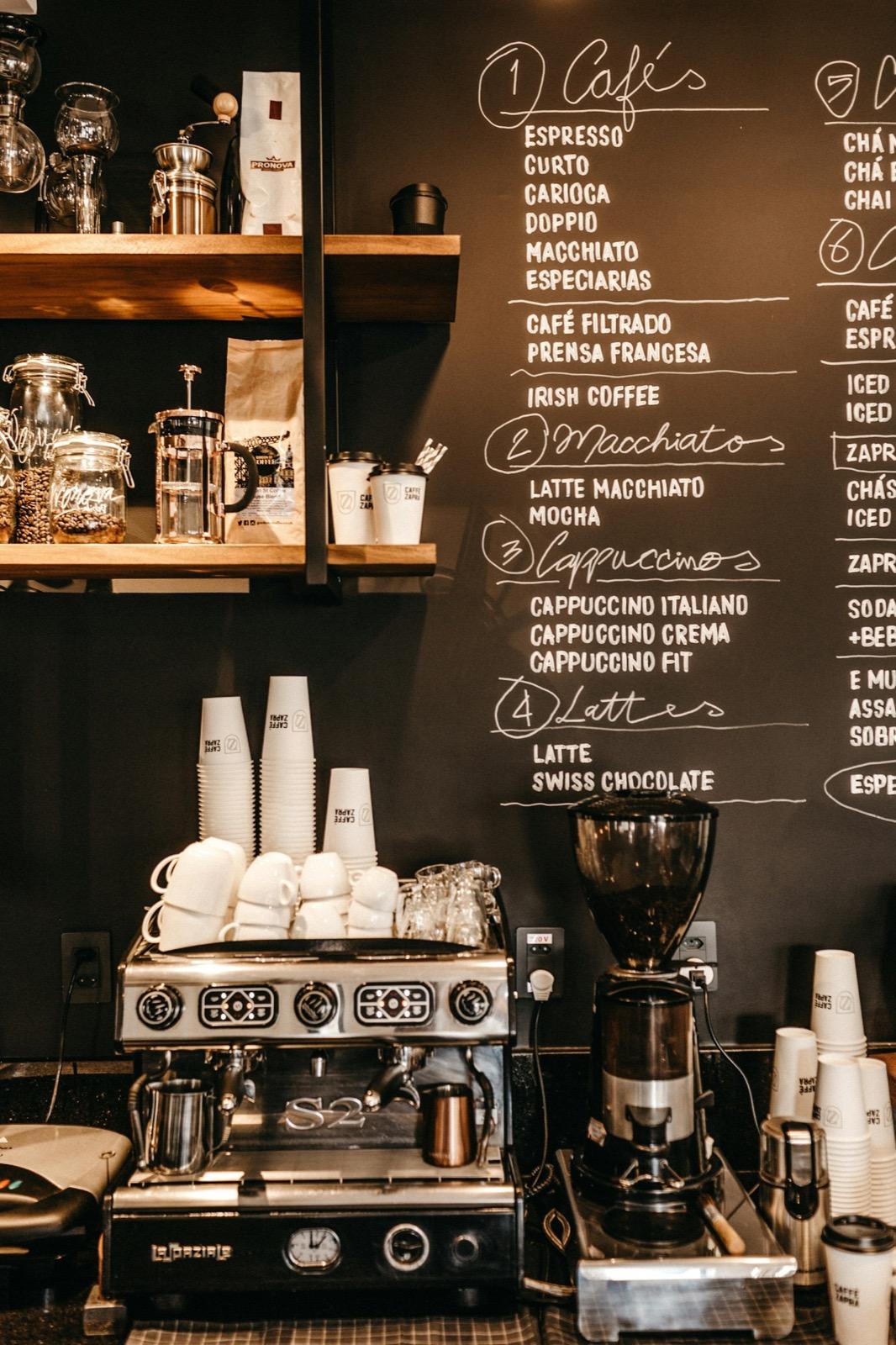
- Coffee equipment: portafilter or bean-to-cup machine, grinder, water filter. What pays off for your volume is covered in the guide to buying coffee.
- Crockery and dishwashing: china for the café area needs a commercial dishwasher and space for dirty dishes.
- Refrigeration: a display case for cakes and filled items, a fridge for milk, butter and spreads close to the counter.
- Comfort factors: light, acoustics, power sockets, Wi-Fi and a coat hook decide whether guests stay.
- Outdoor area: tables on the pavement need a permit from the municipality for the Schanigarten in Austria and usually a special use permit for outdoor seating in Germany.
A breakfast offer that suits a bakery
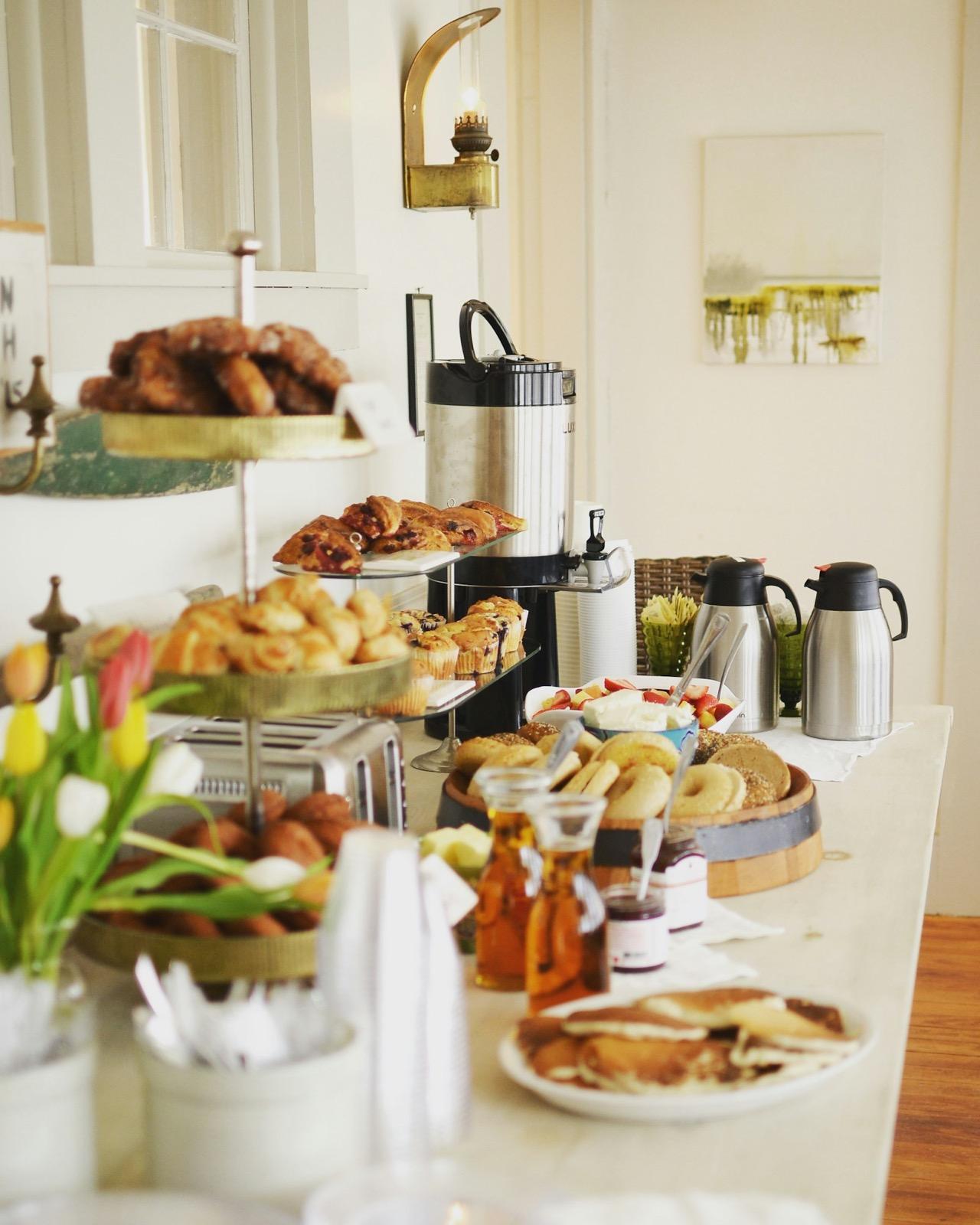
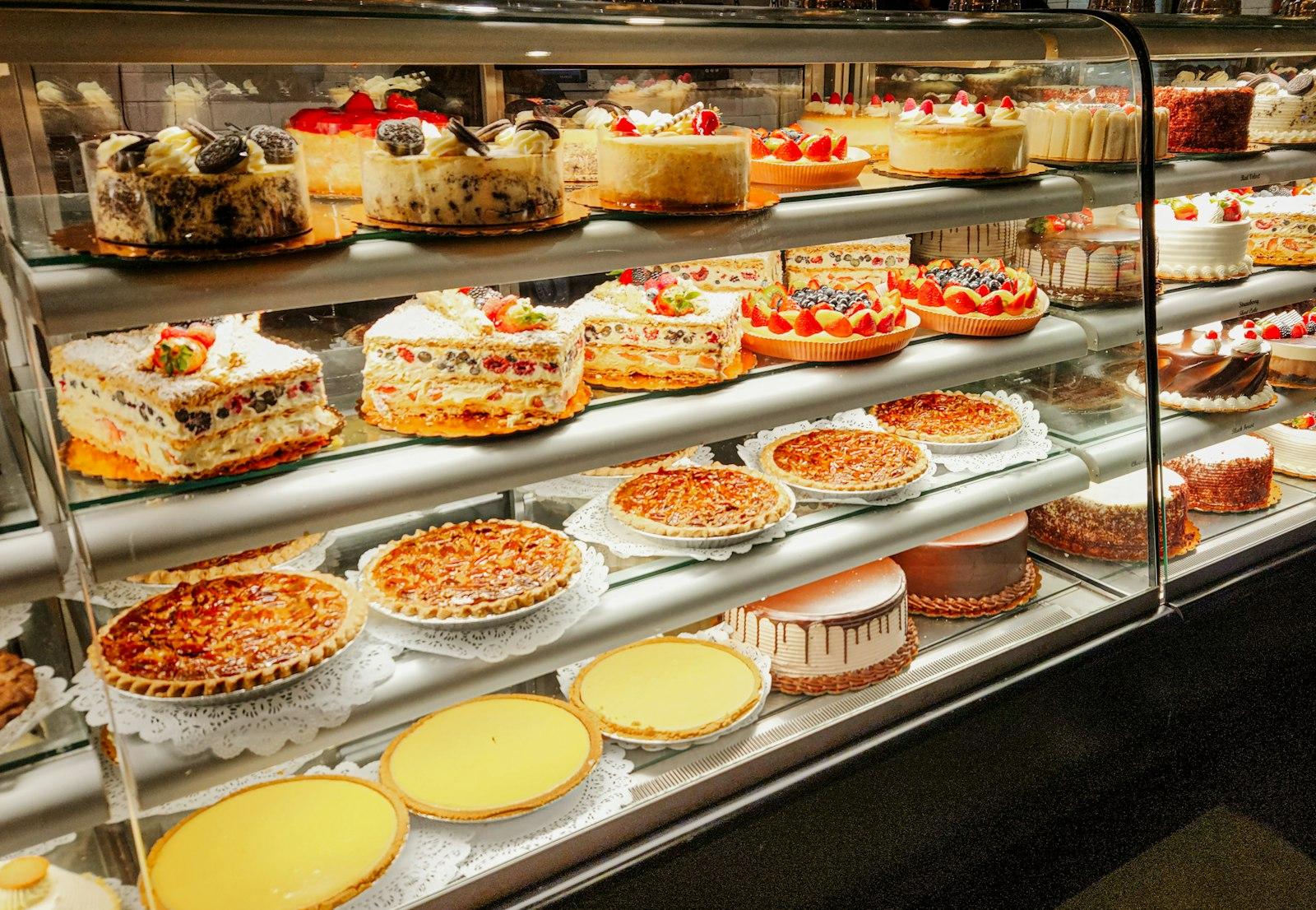
A bakery’s strength is its own baked goods. A breakfast built on them needs few extra ingredients and is quick to plate: pastries with butter and jam, a cheese and ham plate, an egg, a muesli. The fewer components that have to be prepared fresh, the more likely your team can manage it even with ten people waiting at the front. You will find detailed ideas for menus, buffets and weekend brunch in the guide to breakfast and brunch in a café.
Start small
Three to five breakfast options from your own range, plus coffee, tea and juice.
Prepare
Portion butter, spreads, cheese and fruit in advance so a plate is ready in a few minutes.
Calculate
Work out the food cost per plate and set the price so that time and crockery are paid for too. The menu price calculator gives you the plate price including VAT.
Review
After a few weeks, check which options sell and drop the weak ones.
Limit breakfast hours if your kitchen is small, for example until 11 am on weekdays and longer at weekends. Show these hours on the menu, in the shop and online so nobody is disappointed at half past eleven.
Workflows: counter sales and service side by side
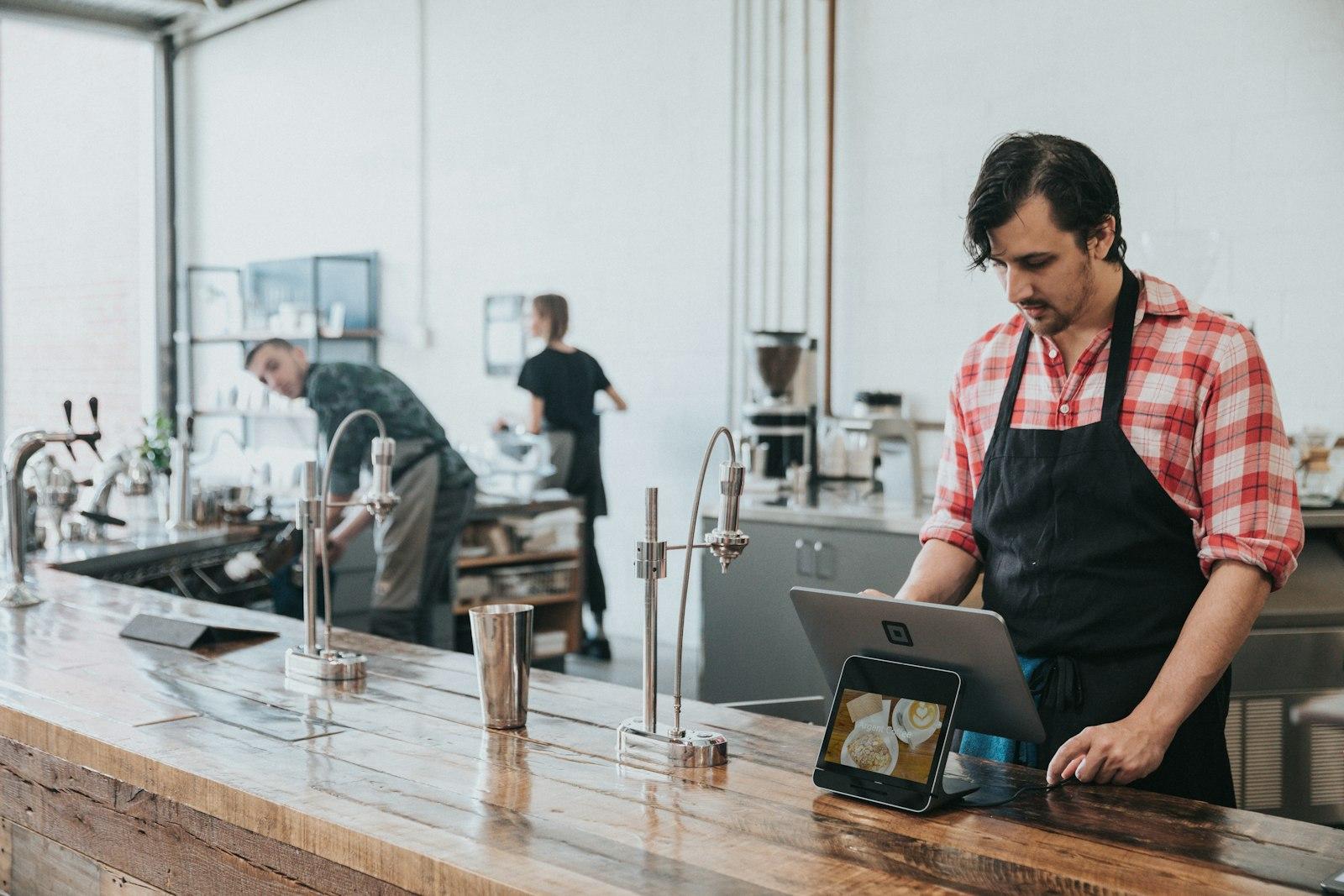
The biggest challenge is not the equipment but the rhythm. At the counter, speed counts; in the café area, attention does. If the same person does both at once, one of them suffers. So decide which service model suits your size.
| Model | How it works | Suits |
|---|---|---|
| Self-service | Order and pay at the counter, guests carry their own tray | Small café corners, few staff |
| Order at the counter, served at the table | Guests get a number, drinks and plates are brought over | Breakfast that needs preparation |
| Table service | Staff take orders and collect payment at the table | Larger areas with their own staff |
How to get it right
- A fixed person responsible for the café area at peak times
- A separate coffee pick-up point so the sales queue keeps moving
- A tray return station guests can use themselves
- A clear sign showing where to order and pay
Better not
- Leaving guests waiting at the table without anyone noticing them
- Stacking crockery until the sink overflows
- Squeezing table coffee orders in between bread customers
- Offering breakfast when nobody has time to prepare it
Till, allergens and prices
Your till must handle separate VAT rates, table orders and possibly tips. In Austria, the cash register obligation (Registrierkassenpflicht) applies, in Germany the requirements for till systems with a TSE. Check with your till provider that keys for “eat in” and “take away” are set up properly. More on this in the guides to the cash register in Austria and to till systems in Germany.
Breakfast plates, cakes and filled items are subject to the same allergen rules as the counter, except that guests at the table ask more often. Keep allergen information ready for every option and train your team. Details are in the guides to allergens in Austria and allergens in Germany. For the café area you also need a legible price list of food and drinks.
Before the first guest sits down
- Concept agreed with the WKO or IHK and the trade authority
- Building or operating facility questions settled, guest toilet sorted
- VAT rates for eating in and taking away agreed with your tax adviser
- Till set up with separate keys
- Allergen information documented for all breakfast options
- Price list for the café area on display
- Service model and responsibilities discussed with the team
Showing your café area online
Many guests do not even know that they can sit down and have breakfast in your bakery. Show them: with photos of the café area in your Google profile, with the right attributes such as seating or breakfast, and with a dedicated breakfast page on your website. Searches like “breakfast near me” or “bakery with café” are then more likely to be linked to your business. Give the same breakfast and opening hours everywhere.
Your bakery website with café and breakfast
See in a free preview how your website could look with a breakfast menu, opening hours and photos of your café area.
A free preview of your venue website, designed by us.