Key points at a glance
- A newsletter is your own channel: no algorithm decides who sees your message, and the addresses belong to you, not to a platform.
- In Austria (§ 174 TKG 2021) and Germany (§ 7 UWG), marketing emails generally require prior consent. Double opt-in is the usual way to prove it.
- Guests open what is useful to them: events, seasonal menus, holiday hours, gift vouchers and a look behind the scenes. One clear topic per issue works better than a jumble.
- For most venues one issue a month plus special occasions is enough. Reliability matters more than frequency.
- Every issue needs an unsubscribe link and sender details. Measure clicks and bookings, not just opens.
This post is general information and does not replace legal or tax advice. Rules change and some differ between federal states: check the details with your chamber of commerce (WKO) or IHK, the competent authority or your tax adviser.
Why a newsletter pays off for venues
Social media is borrowed reach. The platform decides how many of your followers see a post, and that changes all the time. An email list, on the other hand, belongs to you. People who sign up have consciously said yes: they know your venue, have usually been there and want to come back. These are exactly the guests who fill tables on a quiet Tuesday, buy vouchers before Christmas and turn up for the roast goose dinner or the wine tasting.
A newsletter does not replace your website, Google profile or Instagram; it complements them. The website is where guests sign up and where the newsletter links lead: to the event page, the menu, the booking form. How to bring the channels together in a plan that takes little time is shown in the online marketing plan for restaurateurs.
| Channel | Who sees it? | Strength |
|---|---|---|
| Newsletter | Everyone who signed up and opens their inbox | Direct, plannable, your own data |
| Instagram, Facebook | Part of your followers, depending on the algorithm | Images, reach beyond regulars |
| WhatsApp channel | Those who follow the channel and check it | Short, fast, very personal |
| Google posts | People searching for you right now | New guests at the moment of search |
Consent, double opt-in and the GDPR
Legally, a newsletter is advertising by email. In Austria this is governed by § 174 TKG 2021 (Telecommunications Act), in Germany by § 7 UWG (Act against Unfair Competition). Both generally require the recipient's prior consent. On top of that comes the GDPR: you must be able to prove consent, inform guests in advance, and withdrawing must be as easy as signing up (Art. 7 GDPR).
In practice, you prove consent with double opt-in: after signing up, the person receives an email with a confirmation link and is only added to the list after clicking it. This ensures nobody has signed up with someone else's address. The WKO (Austrian Economic Chamber) recommends keeping the confirmation email plain: confirmation text, link and sender details, but no advertising yet.
Form
Only the email address is mandatory, the first name optional. One sentence says what is coming and how often, with a link to the privacy policy.
Box not pre-ticked
Where the sign-up sits next to a booking or voucher purchase, guests tick it themselves. A pre-ticked box does not count as consent.
Confirmation email
The tool sends it automatically: short text, a clear confirmation button, no offers.
Log
The tool stores the time of sign-up and confirmation. That is your proof if anyone asks.
Welcome email
Only now does the marketing begin: a warm hello, what guests can expect, perhaps a note about the next event.
The newsletter belongs in your privacy policy, with purpose, tool and retention period. You sign a data processing agreement with the newsletter tool provider (Art. 28 GDPR); reputable providers make it available in your account. If you send regularly, also check the imprint rules: in Austria under the Media Act (Mediengesetz), in Germany, depending on the content, under the Digital Services Act (DDG) and the Interstate Media Treaty (MStV). Details are in the guides to the imprint in Austria and the imprint in Germany.
Where to collect sign-ups
The best subscribers are guests who have just had a lovely evening with you. So make sign-up possible where these people already are, and be honest about what they get: “Once a month: new menu, events and offers. Unsubscribe any time.”
- Website: a short form in the footer and on the event page, not a pop-up that hides the menu at the first click.
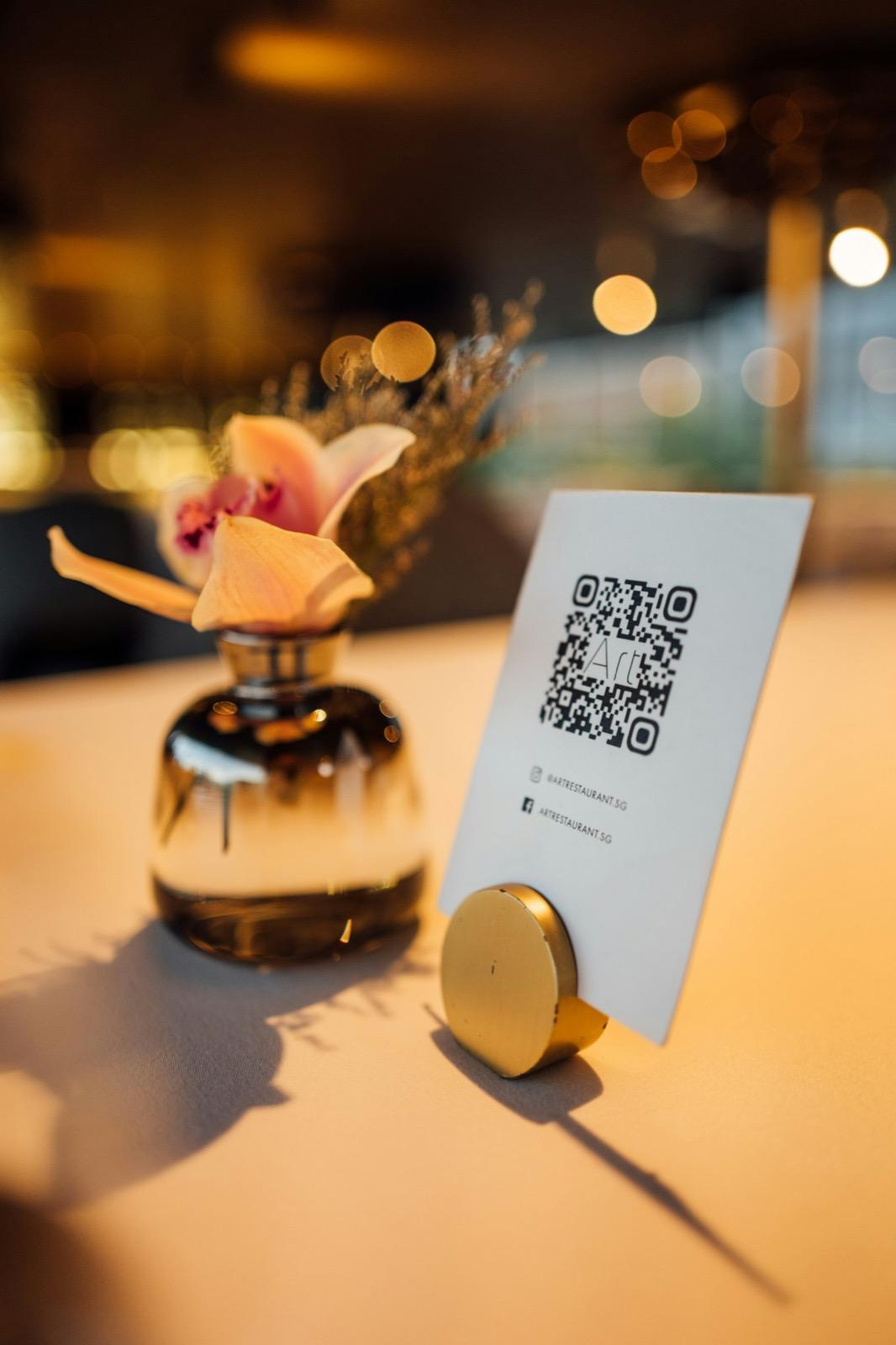
- QR code in the venue: on the table stand, the bill folder or the counter, leading straight to the sign-up form. If you already have a table stand with a menu QR code, simply add a note about the newsletter to it.
- Bookings and voucher purchases: a voluntary box in the form that is not pre-ticked.
- Events: a sign-up sheet on paper or a tablet at tastings and concerts, followed by the confirmation email.
- Hotels and guesthouses: ask voluntarily at check-in or in the booking confirmation.
- Social media: the sign-up link in your bio, mentioned now and then in stories.
A small incentive is allowed if it is honest, such as an aperitif on the next visit for new subscribers. But it must not be tied to another service, and signing up remains voluntary.
Content guests actually open
Guests do not subscribe to a newsletter to read ads. They want to know what is new and when it is worth dropping by. Good hospitality newsletters are short, have one nice photo and a clear next step: book, get a ticket, buy a voucher.
- Events: wine tasting, live music, quiz night, cooking class, holiday brunch. With date, time and a link to the event page. How to promote events on every channel is covered in promoting events online.
- Seasonal menu: asparagus, wild garlic, mushrooms, game, goose or pumpkin. Two or three dishes with a photo and the dates are enough.
- Opening hours: public holidays, closures, the start of the garden season, new rest days.
- Gift vouchers: before Christmas, Mother's Day or Valentine's Day, with a direct link to buy.
- Behind the scenes: the new chef, the winemaker behind the house wine, the recipe of the most popular dessert.
- Exclusive for subscribers: early access to New Year's Eve bookings or a seat at the chef's table evening.
How to get it right
- One main topic per issue, clear in the subject line
- Your own photos of dishes, team and venue
- One clear button: book, ticket, voucher
- Short paragraphs that read well on a phone
Better not
- The entire menu as a PDF attachment
- Subject lines like “November newsletter”
- Five topics and ten links in one email
- Text only inside images, which mail apps often do not display
A voucher for your next issue
Design a print-ready gift voucher in your venue's colours and announce it in your newsletter before Christmas or Mother's Day.
How often and when to send
Too rarely, and guests forget they signed up. Too often, and they unsubscribe. For most venues a fixed monthly date plus individual occasions is a good rhythm. What matters is that you keep it up: ten good issues a year are better than a burst in spring followed by silence.
| Venue | Rhythm | Typical occasions |
|---|---|---|
| Restaurant, Wirtshaus | Monthly | Seasonal menu, holidays, vouchers, goose season |
| Café, bakery | Monthly or every two weeks | New cakes, brunch, pre-orders for Easter and Christmas |
| Bar, club | Before every event series | Line-up, advance tickets, specials |
| Heuriger, wine bar | Before every opening period | Ausg'steckt dates, new vintage |
| Hotel, guesthouse | Four to six times a year | Season start, packages, early booking |
For timing, look at the occasion: an invitation to weekend brunch works best on Wednesday or Thursday, a voucher reminder two to three weeks before the holiday. Which time of day works for your guests will show in the tool's statistics after a few issues.
Newsletter tools: what to look for
Never send a newsletter from your normal inbox with all addresses in the To or BCC field. It easily exposes addresses, ends up in spam and offers neither double opt-in nor an unsubscribe link. A newsletter tool handles all of this automatically. Well-known providers in the German-speaking market include CleverReach, rapidmail, Brevo and Mailchimp; many offer a free or low-cost start for small lists. Compare prices and features directly with the provider, as they change often.
How to recognise a suitable tool
- Built-in double opt-in with a log of sign-ups
- Data processing agreement, servers preferably in the EU
- Unsubscribe link added to every issue automatically
- Templates that look good on phones, no coding needed
- Sign-up form to embed in your own website
- Groups or tags, for example for events, hotel guests or corporate clients
- Setup of SPF, DKIM and DMARC for your own sender address
- Interface and support in your language
Unsubscribe link and mandatory details
Every issue must include a simple, free way to unsubscribe. A single click on the link is enough, without login and without giving a reason. Anyone who unsubscribes receives no more marketing, not even the one issue that was already scheduled. Good tools add unsubscribes to a block list right away, so nobody is accidentally imported again.
What every issue needs
- The venue's name as sender, recognisable in the inbox
- A subject line that matches the content and does not mislead
- A clearly visible unsubscribe link, usually in the footer
- Imprint or a link to it, with address and contact
- Link to the privacy policy
- Replies to the sender address reach a real person
Measuring success: which numbers count
Newsletter tools show open rate, click rate and unsubscribes. The open rate, however, has become unreliable: Apple Mail loads content automatically on many iPhones, so emails count as opened that nobody has read. More meaningful are clicks on book, ticket or voucher, and what happens in the venue afterwards.
- Clicks per link: which topic really interests your guests?
- Bookings and sales: a dedicated link or a keyword like “newsletter” in the booking form, a voucher offer only for subscribers.
- Unsubscribes per issue: if they rise, the issue was too salesy or came too soon after the last one.
- List growth: how many new sign-ups come in each month, and from where?
- Feedback at the table: do guests say “We read it in the newsletter”? Your team should pass it on.
You will also see clicks to your website in your analytics if the tool tags the links. How to evaluate website numbers in a privacy-friendly way is explained in the guide to website analytics. Keep the list clean, too: addresses that have not opened or clicked anything for a year get one friendly question whether they want to stay, and are removed otherwise. A smaller, active list reaches the inbox more reliably. If you want to bind regulars even more closely, you will find ideas in the post on loyalty programmes.
A website with newsletter sign-up
We build your website with an event page, menu and a sign-up form connected to your newsletter tool. The preview is free.
A free preview of your venue website, designed by us.