Key points at a glance
- No/low is no longer a January topic: in an online survey that the POS provider Lightspeed commissioned from Appinio in January 2026 (1,000 people aged 18 to 65 in Germany), 61.1 percent say, according to trade press reports, they are likely to order alcohol-free drinks in bars and restaurants outside Dry January too.
- Alcohol-free does not mean 0.0: beer with up to 0.5% vol. may count as alcohol-free. For pregnant women and children, consumer advice centres explicitly recommend 0.0 products.
- Cost mocktails like cocktails: fixed recipe, cost per cl, target ratio, VAT. A 0% spirit often costs as much to buy as a gin.
- Price by experience, not by alcohol: an elaborate signature mocktail may cost clearly more than a lemonade. What counts is the gross profit in euros.
- Make it visible: its own section near the front of the menu, the same glasses as cocktails, a team that recommends without stigma, and the drinks online on your website, Google and Instagram.
This post is general information and does not replace legal or tax advice. Rules change and some differ between federal states: check the details with your chamber of commerce (WKO) or IHK, the competent authority or your tax adviser.
Why no/low matters now: the numbers
The change is measurable. According to the drug affinity study of Germany's Federal Institute for Public Health (BIÖG), only 25 percent of 18 to 25-year-olds in Germany drink alcohol at least once a week, a historic low. In a YouGov survey for the German fruit juice association, 25 percent of 16 to 26-year-olds said they drink mocktails regularly, up from 11 percent the year before. At the Skyline Bar 20up in Hamburg, alcohol-free drinks account for around 30 percent of cocktails sold, according to the bar manager, as the trade portal Tageskarte reported in October 2026.
- Beer: according to the German Federal Statistical Office, German breweries produced just over 616 million litres of alcohol-free beer in 2025, 6.5 percent more than the year before, while beer with alcohol declined.
- Austria: according to the annual report of the Austrian brewers' association, domestic output of alcohol-free beer rose by 6.1 percent in 2025 to almost 300,000 hectolitres, around 4 percent of domestic output, in a shrinking overall market.
- Guests in hospitality: in the Appinio survey commissioned by Lightspeed (January 2026, 1,000 people in Germany; figures as reported by the trade press, the original results are not publicly linked), 25.9 percent say they generally do not drink alcohol. The main reason for choosing alcohol-free is driving (46.2 percent), followed by health (34.3 percent).
- What gets ordered: alcohol-free beer (43.5 percent), homemade lemonades and classic soft drinks (41.1 percent each) and alcohol-free mixed drinks (38.8 percent).
The most important number for your costing is a different one, though: 54.9 percent of respondents often feel alcohol-free mixed drinks are “expensive lemonade”, and 84.2 percent care about creativity and taste. So guests will pay for alcohol-free drinks when they can tell there is craft in the glass. That is what this guide is about. The general basics of drinks costing, from recipe to pour cost, are covered in the guide to costing your drinks menu and cocktails.
Alcohol-free, 0.0% and low-ABV: what the terms mean
The terms on your menu should be accurate, because some guests avoid alcohol completely for health or religious reasons, others are pregnant or recovering alcoholics. If you write “alcohol-free”, you should know what is in the glass.
| Term | What it means | Note for the menu |
|---|---|---|
| Alcohol-free (beer) | Up to 0.5% vol. alcohol | Not suitable for pregnant women, children and abstinent guests, according to the German consumer advice centre |
| 0.0% | For beer, below 0.05% vol. in practice | Label it explicitly if you stock 0.0 products |
| Dealcoholised wine | EU wine law (Art. 119 Regulation (EU) 1308/2013, as of November 2026): “dealcoholised” up to 0.5% vol., “partially dealcoholised” above 0.5% vol. but below the minimum alcohol content of the wine category. From 19 September 2027, new terms apply under Regulation (EU) 2026/471, including “alcohol-free” for no more than 0.05% vol. | Use the producer's designation |
| Mocktail, zero proof | Mixed drink without an alcoholic ingredient | Watch out for bitters, kombucha or dealcoholised ingredients with residual alcohol |
| Low-ABV | Not a legal term: drinks with clearly less alcohol than a classic cocktail | State the alcohol content or base, such as vermouth, sherry, sparkling wine |
The range: from alcohol-free beer to signature mocktails
A good no/low line does not need 30 new bottles. What makes sense is a mix of products that sell without effort and your own drinks that make your bar unmistakable. Think in three tiers:
The base: alcohol-free classics
Alcohol-free lager or wheat beer on tap or in bottles, a 0.0 shandy (Radler), a dealcoholised sparkling or still wine for toasts. Add regional classics: in Austria elderflower syrup, Almdudler, grape juice from the winemaker; in Germany apple or rhubarb spritzer (Schorle) and Spezi.
The bridge: alcohol-free versions of familiar drinks
Gin and tonic with a 0% spirit, spritz with an alcohol-free aperitif, an alcohol-free mule with ginger beer. Guests order what they know, and your team hardly needs new routines.
The showpiece: signature mocktails
Your own drinks with homemade cordials, shrubs (vinegar fruit syrups), tea, verjus, spices or fermented ingredients. Grown-up flavours with bitterness, acidity and herbs instead of pure sweetness, as Lightspeed also recommends.
- Add low-ABV: vermouth tonic, sherry highball, a spritz with less bitter liqueur, sparkling wine cocktails or a beer cocktail. Low-ABV appeals to guests who want to join the party but end the evening clear-headed.
- Use what you have: syrups, juices and garnishes from your cocktail prep work for mocktails too. That way your stock barely grows and waste stays low.
- Few spirits: one or two 0% spirits are enough to start with. Expensive bottles that only turn over once a month tie up money; a look at stocktaking and shrinkage in the bar shows what sells.
- Restaurant: an alcohol-free food pairing with teas, juices and dealcoholised wines complements the wine pairing. Ideas are in the guide to the wine list and wine pairing.
- Club: what is quick sells: prepared mocktail batches, alcohol-free beer and two or three long drinks with a 0% base. More on planning club nights in the guide planning club nights.
Costing mocktails: cost of goods and a worked example
A mocktail is costed exactly like a cocktail: every ingredient gets a fixed quantity in cl, you work out the net purchase price per cl, add garnish and ice and divide the cost of goods by your target ratio. Only then is VAT added. In German hospitality, drinks are taxed at 19 percent: the reduced 7 percent rate for restaurant and catering services expressly excludes drinks (§ 12(2) no. 15 UStG). In Austria, drinks are taxed at the standard rate of 20 percent with few exceptions (§ 10 UStG 1994). As of November 2026.
| Drink | Net cost of goods | Target ratio | Net price | Gross AT (20%) | Gross DE (19%) |
|---|---|---|---|---|---|
| Homemade lemonade 0.4 l (syrup, lemon, soda) | €0.70 | 15% | €4.67 | €5.60 | €5.55 |
| Signature mocktail (3 cl cordial, 6 cl juice, 3 cl lemon, soda, garnish) | €1.15 | 20% | €5.75 | €6.90 | €6.84 |
| Alcohol-free gin and tonic (4 cl 0% spirit, 0.2 l tonic, garnish) | €2.46 | 25% | €9.84 | €11.81 | €11.71 |
| Low-ABV vermouth tonic (6 cl vermouth, 0.15 l tonic, orange) | €1.86 | 25% | €7.44 | €8.93 | €8.85 |
| Alcohol-free beer 0.33 l bottle | €0.90 | 25% | €3.60 | €4.32 | €4.28 |
Two things stand out. First, the alcohol-free gin and tonic is not cheaper to buy than the original: a 0.7-litre bottle of 0% spirit at 22 euros net costs around 0.31 euros per cl, roughly as much as a good gin. There is no alcohol duty on a 0% spirit, because in Germany and Austria it only applies to spirits above 1.2% vol., but production is more expensive and volumes are smaller. Second, a homemade mocktail has a very low cost of goods. If you cost it with the same ratio as a cocktail, you end up with a price that looks like lemonade and brings in few euros. The free drinks calculator for bars and hospitality works out the price per cl and per glass from the bottle price, serving size and target ratio for you.
Cost mocktails and drinks per glass
Enter bottle price, serving size and pouring loss: the drinks calculator shows cost of goods, menu price and profit per bottle, with VAT for Austria and Germany.
Prices relative to alcoholic drinks
The question that occupies guests and teams most: may a drink without alcohol cost almost as much as one with? The answer depends on what is in the glass. Nobody expects cocktail prices for a lemonade. But a signature mocktail with homemade cordial, freshly squeezed juice, a nice glass and garnish takes just as much work as a cocktail and may be priced accordingly.
- Gross profit in euros instead of percent: in Austria, a gin and tonic at 11.30 euros gross with 2.35 euros cost of goods brings in around 7 euros gross profit. A mocktail with 1.15 euros cost of goods brings in around 6.35 euros at 9 euros gross, but only 4.60 euros at 6.90 euros.
- Clear price tiers: for example lemonades and spritzers at the low end, alcohol-free classics in the middle, signature mocktails one to three euros below the alcoholic signature drinks.
- Show value: list the ingredients on the menu, use the same glasses and garnish as for cocktails. In the Lightspeed survey, price is decisive for 75.6 percent, and 35.3 percent would order more often at a more attractive price: the price has to feel like craft.
- Pairing offers: an alcohol-free food pairing or a “0.0 flight” of three small drinks sells more than a single glass.
Placement on the menu: a section people actually read
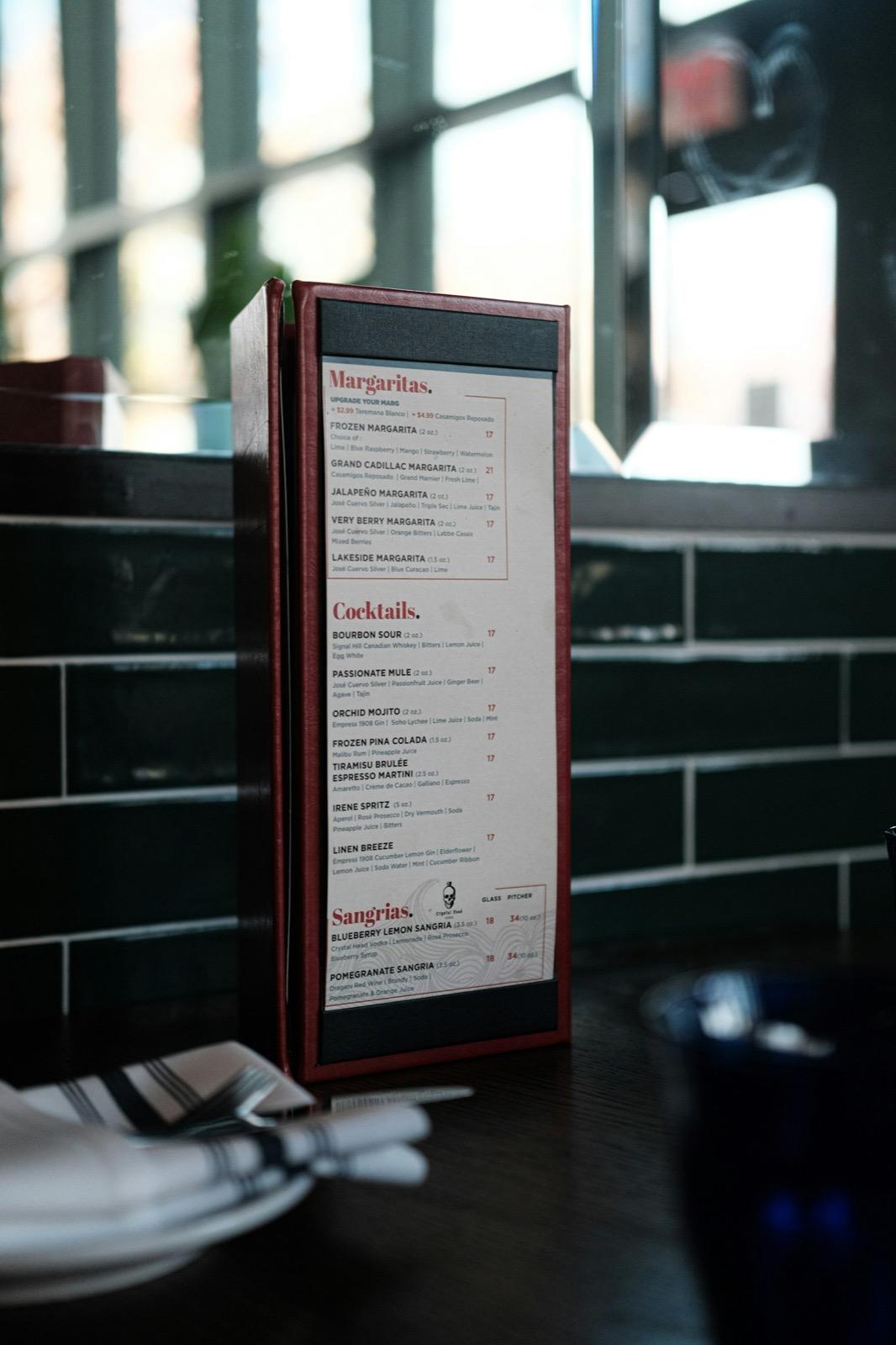
On many menus, alcohol-free drinks sit right at the back between cola and mineral water. Anyone looking there finds nothing that sounds like a bar. Give your no/low line its own, clearly visible place.
How to get it right
- A dedicated section such as “Without & Light” right after the signature drinks
- A note on every signature drink: “also available as 0.0”
- State the base or alcohol content: 0.0%, alcohol-free, low-ABV with vermouth
- Short, appetising descriptions with flavour words like bitter, sour, spicy
- Kids' drinks in a section of their own
Better not
- Hiding mocktails under “soft drinks”
- Names like “Virgin” or “For drivers” that sound like going without
- Writing “alcohol-free” when an ingredient has residual alcohol, without a note
- Cheaper glasses or no garnish for alcohol-free drinks
- Mixing the legally required cheap drinks with the mocktails
Allergens apply to mocktails too, for example sulphites in dealcoholised wine, gluten in alcohol-free beer or nuts in orgeat. You can create a legend of the 14 major allergens for your menu with the allergen generator.
Team and service: selling without stigma
The best menu is of little use if the team only mixes alcohol-free drinks on request and with a raised eyebrow. Guests who do not drink alcohol do not want to have to explain why. A few rules help:
Checklist for the team
- Everyone has tasted all no/low drinks and can describe each in one sentence.
- Ask actively when taking orders: “Happy to make it alcohol-free, we have for example …”
- No comments on reasons, no “Just water tonight?”.
- Serve alcohol-free drinks in the same glass and with the same care as cocktails.
- Recipes and batch lists for mocktails documented just like those for cocktails.
- Recommend a signature mocktail specifically to the driver of a group.
- Be able to explain residual alcohol honestly when asked (0.5% vol. vs. 0.0).
A simple incentive often works: present a new mocktail every month as the drink of the month and let the team help develop it. That makes the no/low line everyone's business, not a compulsory extra.
Promoting your no/low menu online
Guests who do not drink alcohol search specifically: “alcohol-free cocktails” plus the city, “mocktail bar near me”, or they ask an AI for a bar with a good alcohol-free menu. Only bars that show their drinks online as text can be found.
Drinks menu as text on your website
With a dedicated section for alcohol-free and low-ABV drinks, descriptions and prices. That way Google finds it. The guide to the digital menu shows how.
Keep your Google Business Profile up to date
Upload photos of your mocktails, link the menu and show new drinks in posts. Tips in the guide to the Google Business Profile.
Instagram and Reels
A beautiful mocktail is just as photogenic as a cocktail. Show how it is made and name the drink clearly as alcohol-free. Ideas in the guide Instagram for restaurants and bars.
Use occasions
Dry January, Lent, an alcohol-free Sunday or a mocktail tasting as an event. How to plan such nights is covered in the guide events in the bar.
QR code on the table
A QR code for the drinks menu on the table leads straight to the current online menu, including the no/low section.
Your bar website with a no/low menu
See in a free preview how your bar looks online with a drinks menu, an alcohol-free section, events and reservations.
A free preview of your venue website, designed by us.
Sources
- German Federal Statistical Office: production of alcohol-free beer 2025
- WKO, Austrian brewers' association: brewing report 2025
- Tageskarte: Lightspeed survey, alcohol-free drinks as a year-round revenue driver
- HOGAPAGE: mocktails trending, young people drink alcohol-free more often
- Verbraucherzentrale: alcohol in food